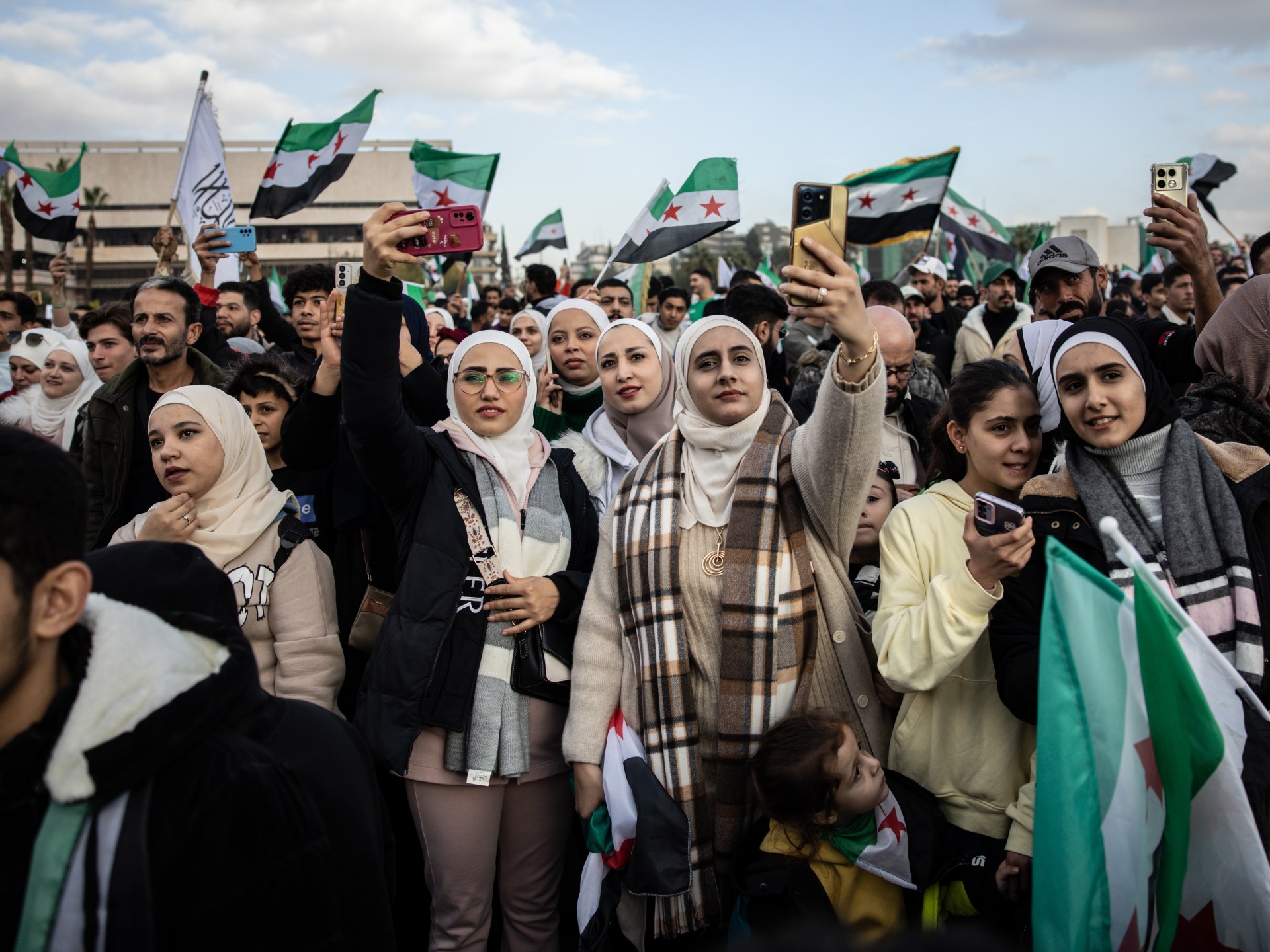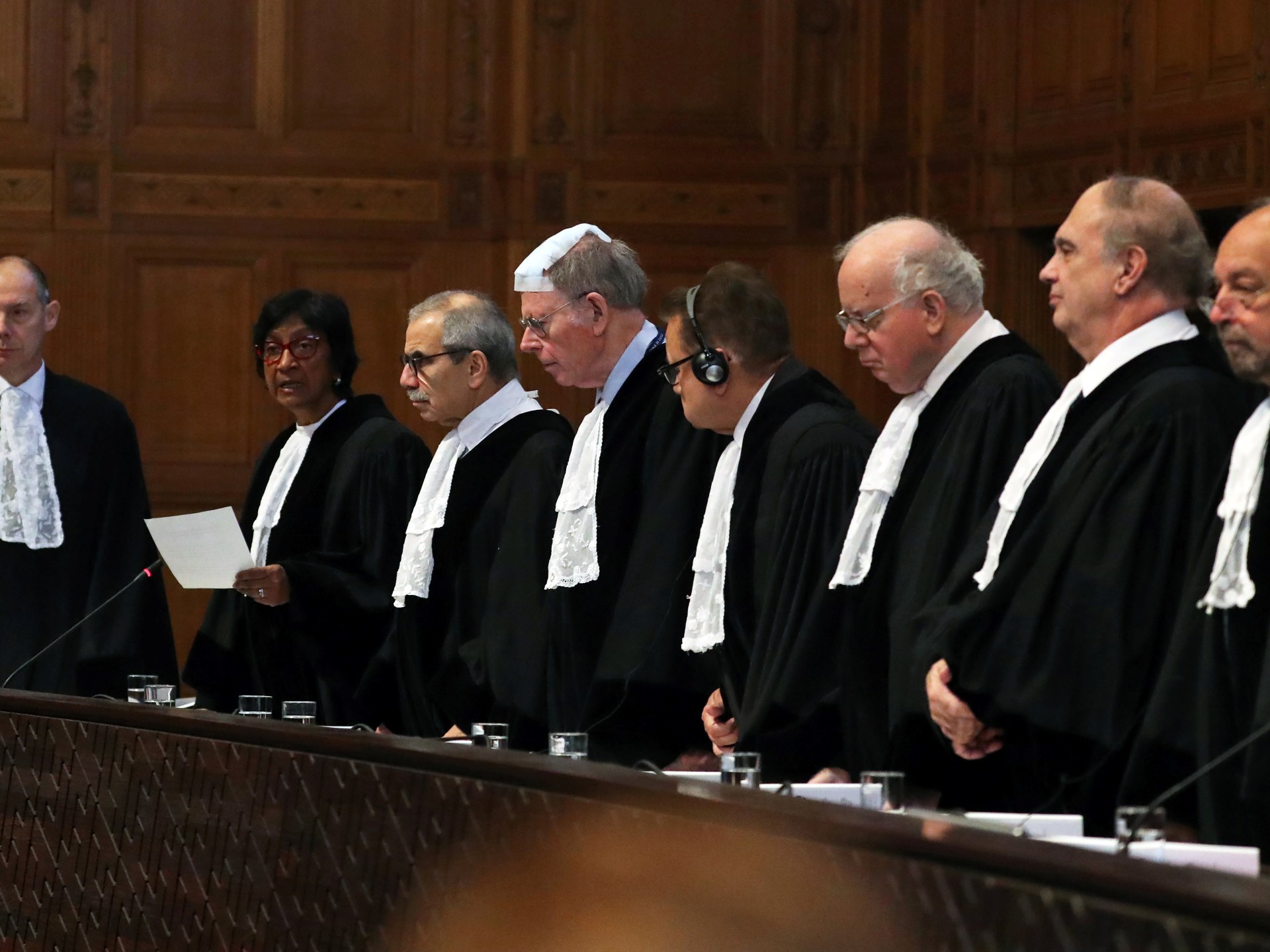

The International Court of Justice (ICJ) will hold public hearings in a landmark case next month accusing Myanmar of committing genocide against its Rohingya community, the top United Nations court said.
The proceedings are expected to set precedents that could affect South Africa’s case against Israel over the war in Gaza, as this will be the first genocide case the ICJ has heard on its merits in more than a decade.
- list 1 of 4Myanmar military says armed groups used hospital it bombed, killing dozens
- list 2 of 4‘New world disorder’: Sudan, Palestine top IRC’s 2026 Emergency Watchlist
- list 3 of 4Myanmar regime claims Aung San Suu Kyi ‘in good health’ despite son’s fears
- list 4 of 4US aid cuts force Rohingya girls into marriage, children into hard labour
end of list
In the first week of hearings, The Gambia, a predominantly Muslim West African country which brought the case to the ICJ, will outline its arguments from January 12 to 15.
Backed by the Organisation for Islamic Cooperation, The Gambia filed the case at the ICJ in 2019, accusing Myanmar of committing genocide against the mostly Muslim Rohingya ethnic group.
Myanmar, which has denied carrying out genocide, can then present its case before the court from January 16 to January 20.
In an unusual move, the ICJ has also allocated three days for hearing witnesses. These hearings will be closed to the public and media.
“The hearings will be devoted to the merits of the case and will include the examination of witnesses and an expert called by the Parties,” the ICJ said in a statement.
Filed by The Gambia to the UN’s top court in 2019, the case accuses authorities in Myanmar of violating the UN genocide convention during a brutal crackdown by the country’s army and Buddhist militias on the Rohingya in 2017.
More than 742,000 Rohingya fled the bloodshed, while witnesses reported murders, rape and entire villages burned to the ground.
Advertisement
As a result, the ICJ, which rules on disputes between countries, ordered Myanmar in 2020 to “take all measures within its power” to prevent a genocide.

Speaking at a special high-level United Nations General Assembly (UNGA) meeting on the situation of the Rohingya in September this year, The Gambia’s Minister of Justice Dawda Jallow said he hoped to see a judgement from the court “soon after” January’s public hearings.
“We filed our case in November 2019, almost six years ago. Now, we are preparing for the oral hearing on the merits in this case, which the court has scheduled for mid-January 2026,” Jallow said.
“The Gambia will present its case as to why Myanmar is responsible for the Rohingya genocide and must make reparations to its victims,” he added.
Wai Wai Nu, executive director of the Women’s Peace Network-Myanmar, told Al Jazeera in September that the number of countries that have intervened in support of The Gambia’s case at the ICJ is “actually very powerful”.
“They could come together and do something to stop ongoing atrocities in Rakhine State,” where armed violence against the Rohingya is ongoing, Wai Wai Nu said, adding that the UN Security Council could also take action without waiting for the ICJ.
About one million Rohingya lived in Myanmar prior to 2017 – making up a small percentage of the country’s population of 55 million people – and entire communities fled across the neighbouring border into Bangladesh as the military campaign of ethnic cleansing ramped up.
Now, more than one million Rohingya live in the world’s largest refugee camp in Cox’s Bazar, across the border in Bangladesh, which has been pressing for other governments to step in and shoulder the burden of hosting vast numbers of refugees.
Many of the refugees have been living in impoverished conditions in the camp for years, while others have faced perilous journeys on boats in a bid to reach other countries.
Related News
‘Uninterrupted oil shipments’: Key takeaways from Putin-Modi talks in Delhi
Military transport plane crashes in war-torn Sudan, killing crew: Report
Hong Kong court convicts democracy activist Jimmy Lai on conspiracy charges