US urges American ships to stay ‘as far as possible’ from Iranian waters
 09 February 2026
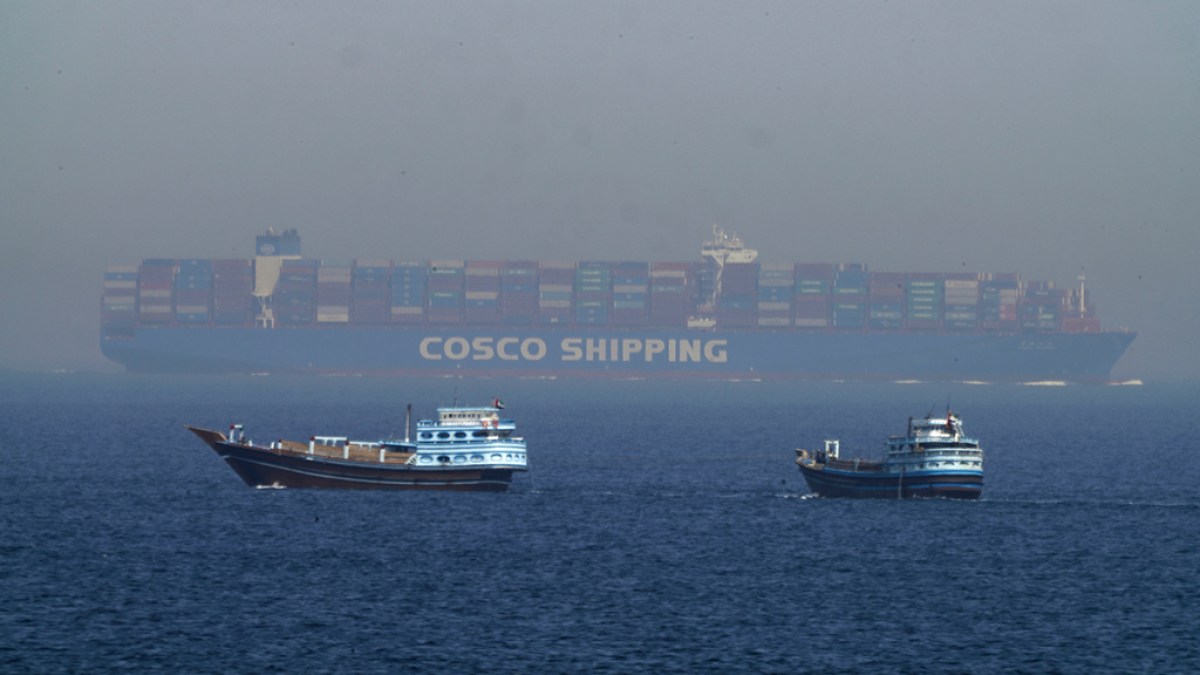

The United States has issued new guidelines to US-flagged ships travelling through the Strait of Hormuz, calling on them to stay away from Iran’s territorial waters amid tensions between Washington and Tehran.
The advisory, released by the US Maritime Administration on Monday, also urged the captains of American ships against granting Iranian forces permission to board US vessels.
- list 1 of 3Iran suggests it could dilute highly enriched uranium for sanctions relief
- list 2 of 3Iran arrests prominent reformist politicians, cites links to US, Israel
- list 3 of 3Netanyahu to meet Trump in US to discuss Iran
end of list
“If Iranian forces board a US-flagged commercial vessel, the crew should not forcibly resist the boarding party. Refraining from forcible resistance does not imply consent or agreement to that boarding,” the guidelines read.
“It is recommended that US-flagged commercial vessels transiting these waters remain as far as possible from Iran’s territorial sea without compromising navigational safety. When transiting eastbound in the Strait of Hormuz, it is recommended that vessels transit close to Oman’s territorial sea.”
The recommendations come after the US and Iran held a round of indirect talks in Oman on Friday, following weeks of escalating rhetoric and threats that brought the two countries to the verge of war.
Shipping attacks
Global shipping lanes and commercial vessels have historically been threatened by geopolitical turmoil, especially in the Middle East.
During the Iran-Iraq conflict in the 1980s, both countries targeted merchant ships in what became known as the Tanker War.
More recently, Yemen’s Houthi group launched attacks against Israel-linked ships in the Red Sea in a campaign that the group said was aimed at ending Israel’s genocidal war on Gaza.
Advertisement
When Israel bombed Iran in June of last year, an Iranian lawmaker suggested that closing the Straight of Hormuz – a major shipping lane that connects the Gulf to the Indian Ocean – would be an option for Tehran should the war escalate.
The US government describes Hormuz as the “world’s most important oil chokepoint” due to its strategic location as the maritime entryway into the energy-producing region.
Late in January, Iran’s Islamic Revolutionary Guard Corps (IRGC) conducted naval military exercises in the strait, prompting the US military to warn Tehran against any “unsafe and unprofessional” behaviour.
The US military later said that it shot down an Iranian drone that approached one of its aircraft carriers in the area.
Washington has also previously seized Iranian oil tankers as part of its maximum pressure campaign of sanctions against Tehran.
In 2019, the United Arab Emirates reported what it described as sabotage attacks against four ships in its territorial waters in the Gulf of Oman.
But there have been no recent public threats by Iran or any other party to vessels in and around the Gulf.
The US has been amassing military assets in the region, with US President Donald Trump regularly threatening renewed strikes against Iran, which saw a wave of anti-government protests last month.
Nuclear talks
In December, Trump said Washington would attack Iran if the country pushes to rebuild its nuclear and missile programmes.
US forces had bombed Iran’s three main nuclear facilities during the June 2025 war, which was started by Israel amid ongoing talks between Tehran and Washington at that time.
Iranian officials have said that current negotiations are “exclusively nuclear”, but the Trump administration has suggested that it also wants to address Iran’s missile arsenal and Tehran’s support for non-state actors in the region, like Hezbollah and Hamas.
On the nuclear front, a major sticking point in the past negotiations has been whether Iran – which denies seeking a nuclear weapon – would be allowed to enrich uranium domestically.
Tehran insists that uranium enrichment is a sovereign right that does not violate its commitments under the Treaty on the Non-Proliferation of Nuclear Weapons (NPT).
But Trump has pushed for zero enrichment.
Asked whether the US has drawn a red line on enrichment in the talks, US Vice President JD Vance told reporters in Armenia on Monday that Trump is the ultimate decider and would likely keep his demands in the negotiations private.
“If you go back to the original negotiation that happened between us and the Iranians, the president was trying very, very hard to actually strike a constructive deal that would have been good for the United States,” Vance said.
Advertisement
“But frankly, the entire administration agreed if the Iranians were smart enough to have made that agreement, then it would have been good for them, too.”
Related News

Bangladeshis seeking jobs in Russia forced to join war on Ukraine: Report

New Yemen government formed with Shaya Mohsin al-Zindani as prime minister
Who is Leqaa Kordia, the Columbia protester still in ICE detention?