US environmental agency says no rise in contamination after Iowa detonation
 28 November 2026
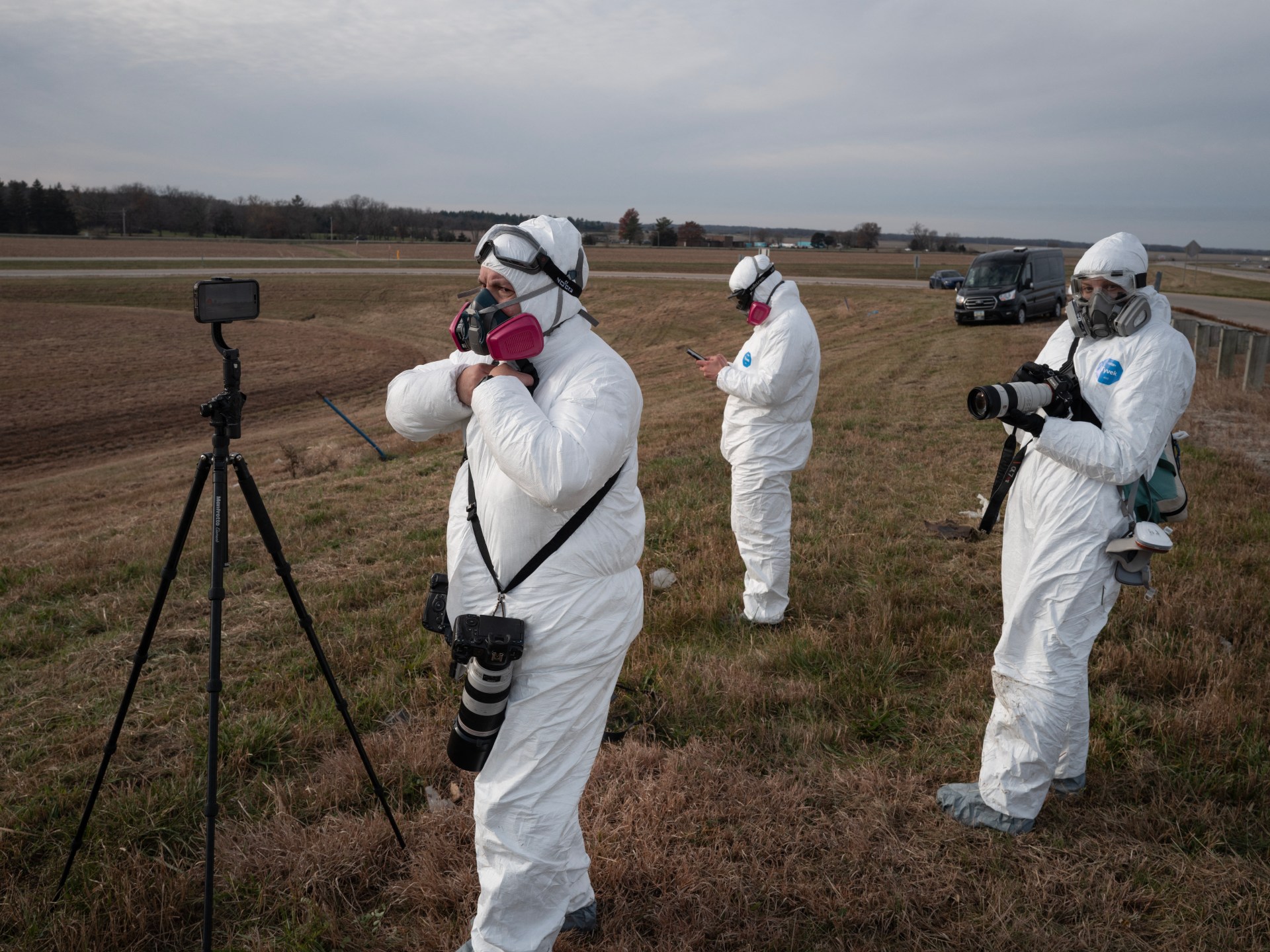

US Army blew up five tonnes of dangerous outdated lead azide used to make munitions.
Initial laboratory results indicate that the controlled detonation of five tonnes of dangerous lead azide in southeast Iowa has not caused a rise in levels of the heavy metal in the bodies of water that supply drinking water to the area, according to the US Environmental Protection Agency (EPA).
The EPA posted its readings online on Saturday, three days after US Army engineers blew up nearly five tonnes (4,500 kg) of highly volatile lead azide stored in 68 degrading plastic drums. The orchestrated demolition was carried out in two simultaneous explosions at an army munitions depot in the tiny farming town of Middletown, Iowa, about 150 miles (241km) southwest of Des Moines, the state capital.
- list 1 of 3US Army to detonate more than 4 tonnes of lead azide in Iowa on Wednesday
- list 2 of 3Report: CIA tortured more people with waterboarding than US agency admitted
- list 3 of 3US military says it disabled merchant ship trying to breach Iran blockade
end of list
The EPA said about 300 people spent Thursday sampling at schools, playgrounds, churches and homes across the region. More than 1,500 samples were taken of air, water, soil and dust before the detonation and hundreds more afterwards, including from homes, parks and drinking water.
“The EPA monitored for the presence of airborne lead for 30 consecutive hours after the controlled detonation using the Xact air monitoring system. We will continue to provide updates in the coming days as new lab results for over 3,200 air, soil, dust and water samples … return and get validated,” the EPA posted on X.
Lead is a heavy metal that’s especially dangerous to children and pregnant women. Once it settles in the environment, it does not break down. Army commanders said the safest option was to immediately detonate the stockpile because it was degrading and might explode at any time as the weather got colder.
Advertisement
But the controlled detonation spurred widespread concerns about potential environmental contamination, as well as questions about how and when the federal government communicated its plans.
Residents and some elected officials have criticised the army for not being more transparent and providing more notice when it first determined the stockpile was unstable.
Residents in Middletown, where the stockpile was held, knew of the plans, but few others did – and the warnings largely failed to register with elected officials and the broader public until days before the planned detonation.
Independent experts welcomed Wednesday’s initial air quality readings but said atmospheric sampling was of limited value and that the real measure of lead fallout would come from sampling of water, soil, and structural surfaces, the analysis of which would take longer.
Related News

US task force to cut off Iran’s transport of advanced weapons: What we know

As Islamophobia ramps up in US midterms, Texas Muslims eye local stakes

Iran war live: Trump says war caused election wipeout but he ‘had to do it’