U.S. Political Fallout Reaches Guyana As Corey Lewandowski Exits And Kristi Noem Probe Raise Bigger Questions
 27 March 2026
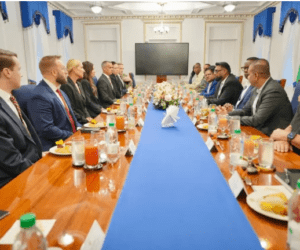

News Americas, NEW YORK, NY, Fri. Mar. 27, 2026: The latest political fallout from Washington is no longer confined to Capitol Hill. It has now reached the Caribbean -specifically Guyana – raising deeper questions about power, influence, and the region’s growing role in U.S. geopolitical strategy.
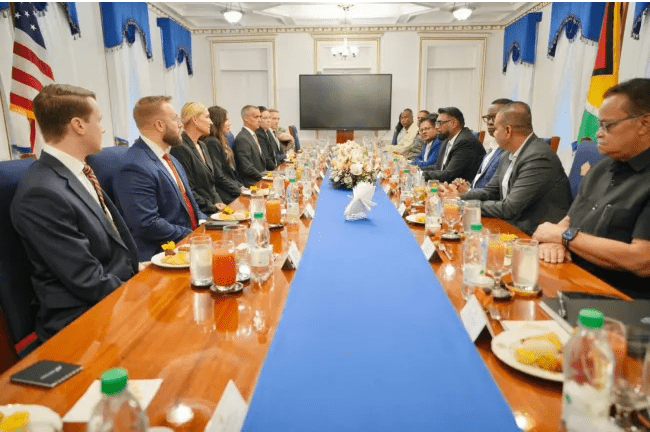
Corey Lewandowski, a longtime political operative and close aide to former U.S. Homeland Security Secretary Kristi Noem, has been fired from his government role amid mounting controversy over his conduct and broader federal investigations. His departure comes amid intensifying scrutiny over his involvement in Department of Homeland Security, (DHS), operations – and after his presence on a high-profile regional trip that included Guyana triggered backlash.
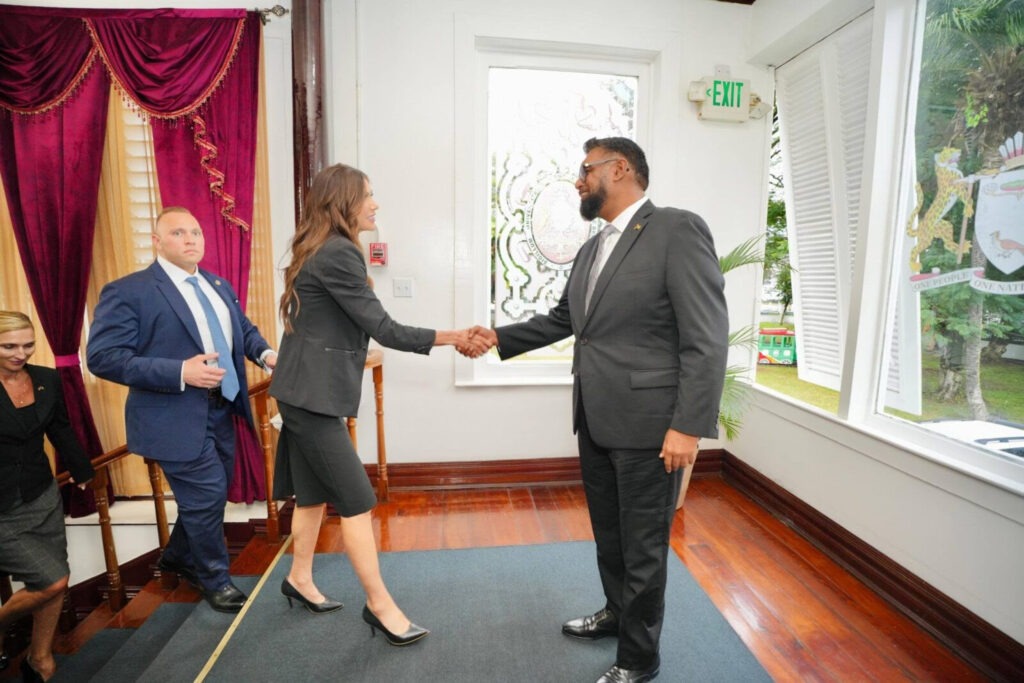
Photos and reports of Lewandowski traveling alongside Noem in Guyana – part of a wider multi-country tour across Latin America and the Caribbean – drew attention not only to his unofficial influence within DHS but also to the optics of U.S. political power being projected into the region.
At the same time, the situation has escalated significantly in Washington.
A federal inspector general investigation is now underway into how DHS contracts were handled under Noem’s leadership – including actions tied to Lewandowski. The probe, confirmed in recent reporting, is examining the awarding of hundreds of millions of dollars in contracts, including a controversial $220 million advertising campaign that bypassed traditional procurement processes and sparked bipartisan concern.
That investigation is separate from ongoing congressional scrutiny and follows weeks of political pressure over allegations of mismanagement, favoritism, and potential conflicts of interest.
Lewandowski’s role has been particularly controversial. Operating as a “special government employee,” he was not subject to the same disclosure requirements as full-time officials, yet reportedly exercised significant influence over decision-making – including contracts and personnel.
His exit now marks another chapter in a broader unraveling that has already seen Noem removed from her position as DHS Secretary and reassigned to a new diplomatic role as a U.S. envoy for regional security initiatives.
But beyond Washington, the implications are increasingly regional.
Guyana’s appearance in this unfolding story is not incidental.
As one of the fastest-growing oil economies in the world, Guyana has rapidly become a strategic focal point for global energy, investment, and geopolitical positioning. The presence of senior U.S. officials – and politically connected figures like Lewandowski – underscores how central the country has become in U.S. foreign policy calculations, particularly around energy security, migration, and regional influence. Guyana’s President, Irfaan Ali, issued a statement saying Guyana and the United States have reaffirmed their commitment to strengthening security cooperation, following a meeting between Ali and US Special Envoy and former Homeland Security Secretary Kristi Noem and her delegation.” President Ali presented Special Envoy Noem with a painting by Guyanese artist Dillon Craig, featuring the Canje Pheasant alongside the Harpy Eagle, a symbolic gesture highlighting Guyana’s national identity.
Noem’s broader tour, which included Guyana, Costa Rica, and other nations, was tied to advancing U.S. security initiatives across the hemisphere. But the overlap between official diplomacy and emerging political controversy has blurred the lines between policy and optics.
For the Caribbean, this moment is revealing.
It highlights how the region is no longer on the periphery of global power dynamics, but increasingly embedded within them – sometimes in ways that raise difficult questions about transparency, accountability, and influence.
The unfolding investigations in Washington will determine the legal and political consequences for those involved. But the regional impact is already clear.
The Caribbean – and Guyana in particular – is now part of a larger geopolitical story that extends far beyond its borders.
And as global capital, energy, and political interests continue to converge in the region, the question is no longer whether the Caribbean matters – but how deeply it is already entangled in the shifting architecture of global power.

Related News
When The Quiet Decide: Reading The Votes, Voices, And The Spaces Between In St. Philip’s...

The Hidden Power of Leadership: Delegating Tasks and Aligning Talent in an Age of Uncertai...

Bad Mindedness And Brain Gain In The Caribbean