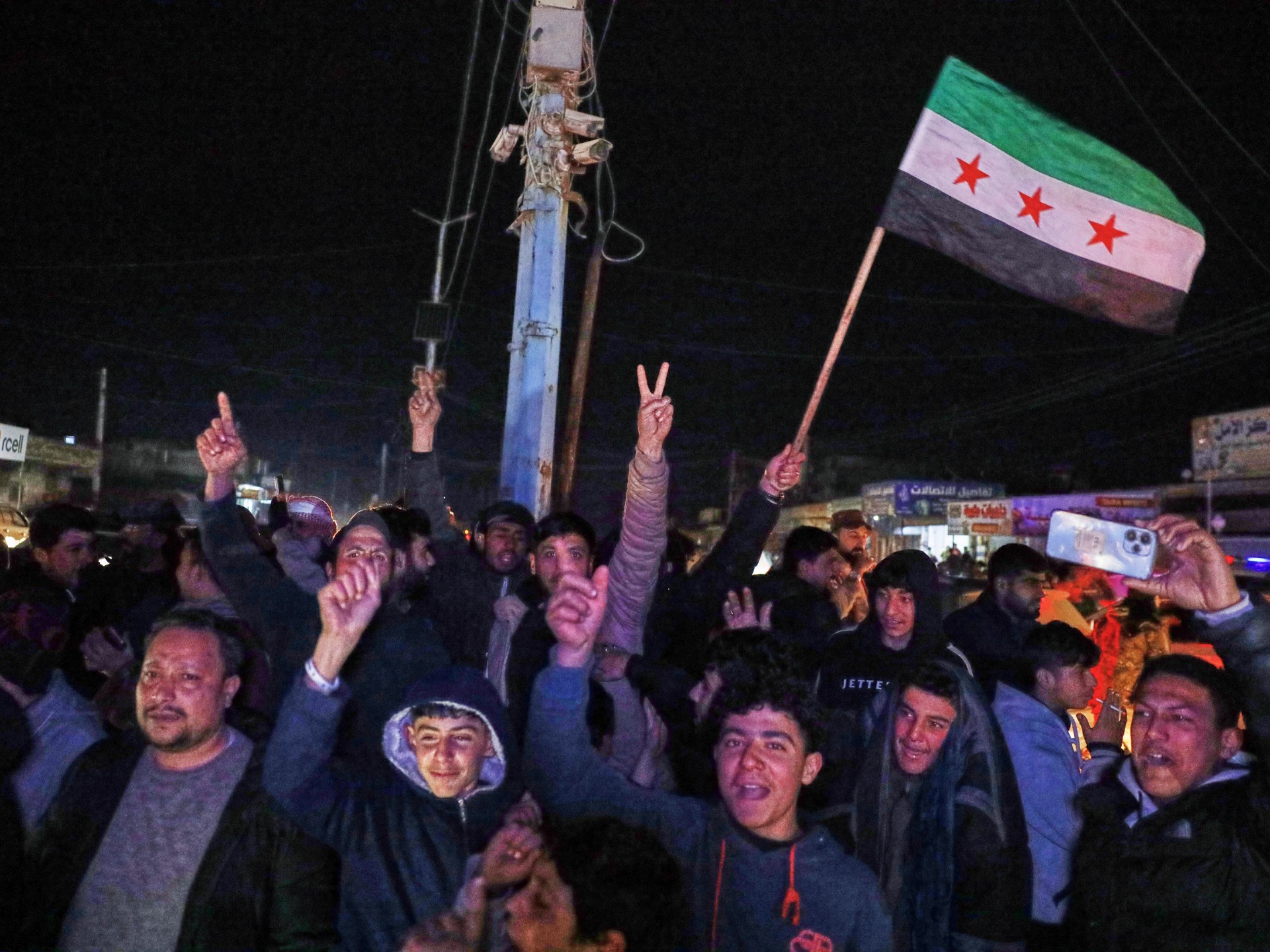

The Syrian government has announced a four-day ceasefire with the Kurdish-led Syrian Democratic Forces (SDF) after the army continued to seize territory in the country’s northeast following lightning advances.
The Syrian Army announced the ceasefire, which came into effect at 8pm (17:00 GMT) on Tuesday.
- list 1 of 4What do we know about the Kurdish groups in the Middle East?
- list 2 of 4Syrian army clashes with SDF test ceasefire, ISIL fighters arrested
- list 3 of 4Could events in Syria have a wider impact for Kurds?
- list 4 of 4Syria-SDF ceasefire hangs in balance after renewed clashes, faltering talks
end of list
It also said it had asked the SDF to provide the name of a candidate for the role of assistant to the defence minister in Damascus, as part of efforts to integrate the Kurds into the Syrian state.
The SDF confirmed it had accepted the ceasefire and said it would not engage in any military action unless attacked.
“We also affirm our openness to political paths, negotiated solutions, and dialogue, and our readiness to move forward with the implementation of the January 18 agreement in a manner that serves de-escalation and stability,” the SDF said in a statement.
However, shortly after the ceasefire came into effect, the SDF claimed that government-allied groups were launching an attack, “using heavy weapons”, on the village of Tal Baroud, along the Abyad road, south of Hasakah.
According to the SDF’s spokesperson, Farhad Shami, the town of Zarkan has been “under intense artillery shelling” in recent hours by Damascus-affiliated factions. He said that government-allied forces have also attacked al-Aqtan Prison north of Raqqa, using five suicide drones and heavy gunfire.
In the past few days, the Syrian government has rapidly advanced and seized territory held by the SDF, in the biggest success and change of control for President Ahmed al-Sharaa after the fall of former leader Bashar al-Assad.
Advertisement
Syria’s Ministry of Interior said the army’s forces have begun to take control of the al-Hol camp in northeastern Syria, home to thousands of ISIL (ISIS) fighters’ families as well as other long-term refugees from the conflict. The SDF abandoned control of the camp earlier today.
The SDF still retains control of Hasakah city, with a population of Kurds and Arabs, and the Kurdish-majority city of Qamishli. The Syrian government said its forces would not try to enter either of the cities during the ceasefire.

Under intense military pressure, the SDF agreed to withdraw from two Arab-majority governorates it controlled for years, Raqqa and Deir Az Zor, the site of Syria’s main oilfields.
Abdul Karim Omar, a Kurdish representative in Damascus, told Al Jazeera that the northeastern region of Syria, formerly under SDF control, is ready for the process of integrating SDF forces into the institutions of the Syrian state.
Syria’s ambassador to the United Nations, Ibrahim Olabi, told reporters that the government hope the ceasefire agreement holds.
“We’re working with our partners at the United States to make sure that it holds,” Olabi said.
The US envoy to Syria, Tom Barrack, announced that the Syrian government was now the US’s main partner in fighting ISIL, a role previously held by the SDF.
Related News

Japan, Philippines sign new defence pacts amid surging China tensions
Trump’s attacks on Venezuela put Mexico on edge
How US sanctions crippled lives of Iranians Trump says he wants to ‘help’