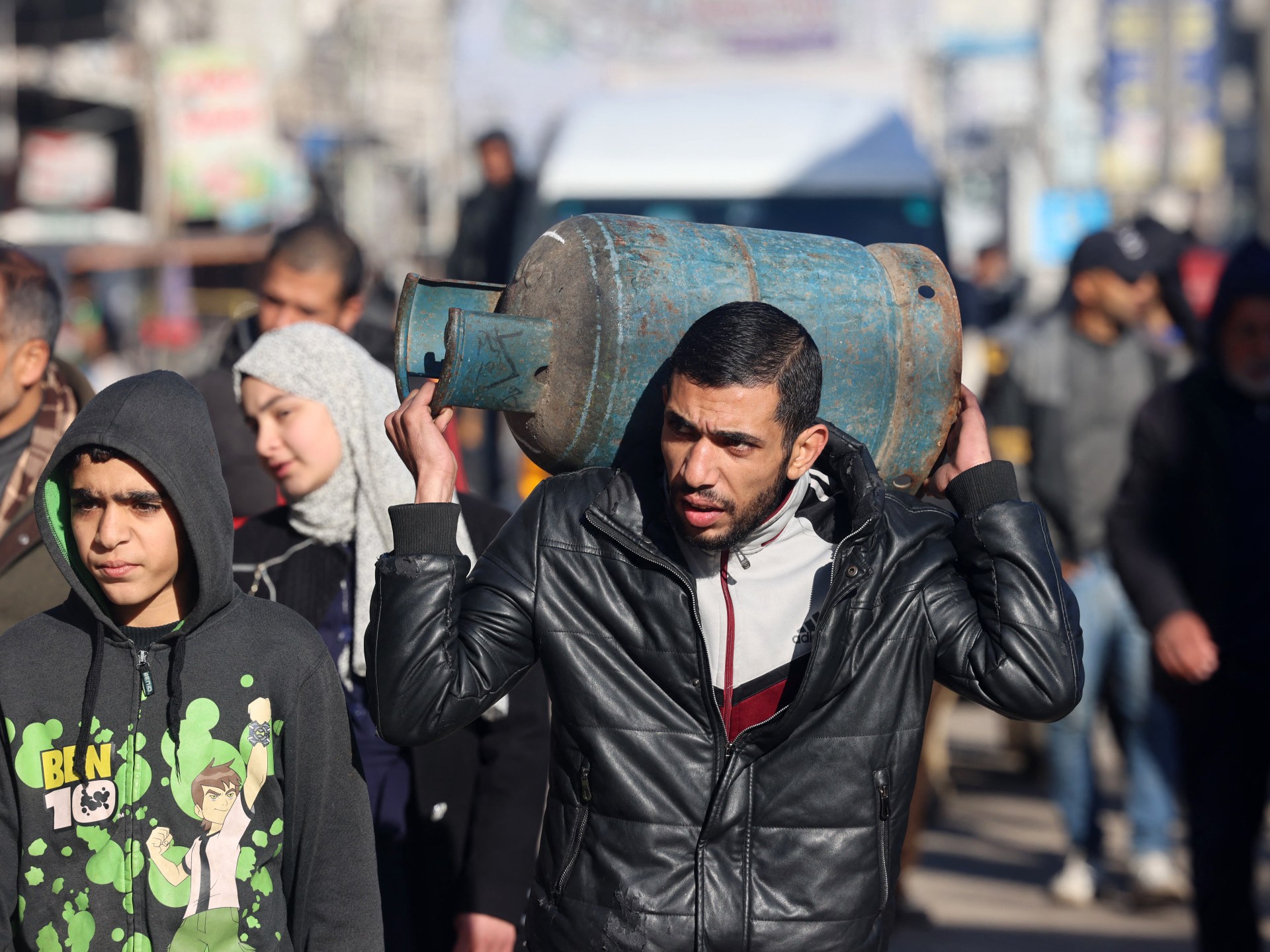

Gaza City – Palestinians in Gaza say the cost of electricity provided by private generators has surged, even as residents increasingly rely on them after Israel’s genocidal war on the enclave destroyed its public power network.
With fuel supplies severely limited and prices at record highs compared with pre-war levels, the cost of electricity has risen sharply. The price per kilowatt-hour has increased from about 2.5 shekels ($0.80) to between 20 and 30 shekels ($7 and $10) – nearly 10 times higher – placing it beyond the reach of many households.
- list 1 of 3UN expert says world has given Israel ‘licence to torture Palestinians’
- list 2 of 3‘Substantial evidence’ of double-tap strike in killing of Hind Rajab
- list 3 of 3Israel’s displacement of civilians in Lebanon is a possible war crime
end of list
The price means that many Palestinians, already suffering from a war-induced economic crisis, have to seek alternatives.
Abdullah Jamal, a baker, is one of them. He feeds wood into a small oven to keep it burning as he prepares bread for displaced families living nearby.
“Palestinians in Gaza have been pushed to search for alternatives for cooking and baking,” says Abdullah of the gas crisis that has now stretched beyond two years.
He adds that people continue to ration gas use despite limited quantities being allowed into the enclave in recent months, fearing supplies could be cut off again.
Although Israeli forces have permitted some fuel and gas shipments since the October “truce” agreement with Hamas, Palestinian sources say that only 14.7 percent of the amount agreed upon in the “ceasefire’s” humanitarian protocol has entered the territory.
Limited supplies, rising costs
Abdullah says the small quantities of gas reaching Gaza are distributed to households, with each family receiving just 8kg (17lbs), delivered every two to three months.
Advertisement
He earns about $10 a day, money he cannot afford to squander on extra gas or power.
Nearby, another young man sells bottles of diesel to vehicle owners.
Fuel prices remain volatile. At the height of the war, as a result of Israeli import restrictions, diesel reached about 90 shekels ($29) per litre. Prices are still roughly triple their pre-war level of 7 shekels ($3.30), pushing up transportation costs.
Israel’s war, which has killed more than 75,000 Palestinians, has left Gaza facing overlapping crises affecting all aspects of life for more than 2 million Palestinians. Most homes lack reliable electricity and gas, and many families cannot afford alternative energy sources.
Limited supplies
According to Gaza government data from this month, Israeli authorities have only allowed 1,190 fuel trucks into the enclave out of the 8,050 that had been expected since the “ceasefire” began. The agreement stipulates that 50 fuel trucks be allowed into Gaza per day.
That amounts to a compliance rate of just 14.7 percent, explaining the severe shortages.
Iyad al-Shorbaji, the director general of Gaza’s Petroleum Authority, said that the territory requires between 350 and 400 cooking gas trucks per month, as well as 15 million litres (4 million gallons) of diesel and 2.5 million litres (660,000 gallons) of gasoline.
He told Al Jazeera that current supplies fall far short, with only 100 gas trucks entering monthly.
Fuel shipments, he added, are largely channelled through international organisations for use in health and public services, alongside limited commercial quantities of no more than 3 million litres (390,000 gallons) per month.
Al-Shorbaji warned that the deficit is disrupting the economic and service sectors, with some facilities forced to operate by buying gas originally allocated to stations or households.
Families struggling
Households now receive an 8kg (18lbs) gas cylinder at irregular intervals tied to incoming supplies, ranging from every 45 days in the best case scenario, to as long as every 100 days in the worst.
Al-Shorjabi noted that before the war, families could obtain gas whenever needed, with an average consumption of about 12kg (26lbs) every 25 days per family.
He attributed the rising prices to higher purchase costs, transportation expenses, coordination fees for suppliers, and the combined effect of scarcity and increased demand.
Al-Shorjabi expressed hope that fuel and gas supplies would improve, but said that it remains dependent on Israeli procedures controlling the crossings into Gaza, which he described as part of the “policies of suffocation and restriction” imposed on the Palestinian enclave.
Related News

Ukraine finds new role as protector of US, Gulf allies amid Iran war

Trump says not ‘appropriate’ for Iran to participate in the World Cup in US

US civil rights group documents ‘broad attack on Muslim life’ in 2025