Male refugees stigmatised across Europe: ‘This kind of stuff really hurts’
 11 February 2026
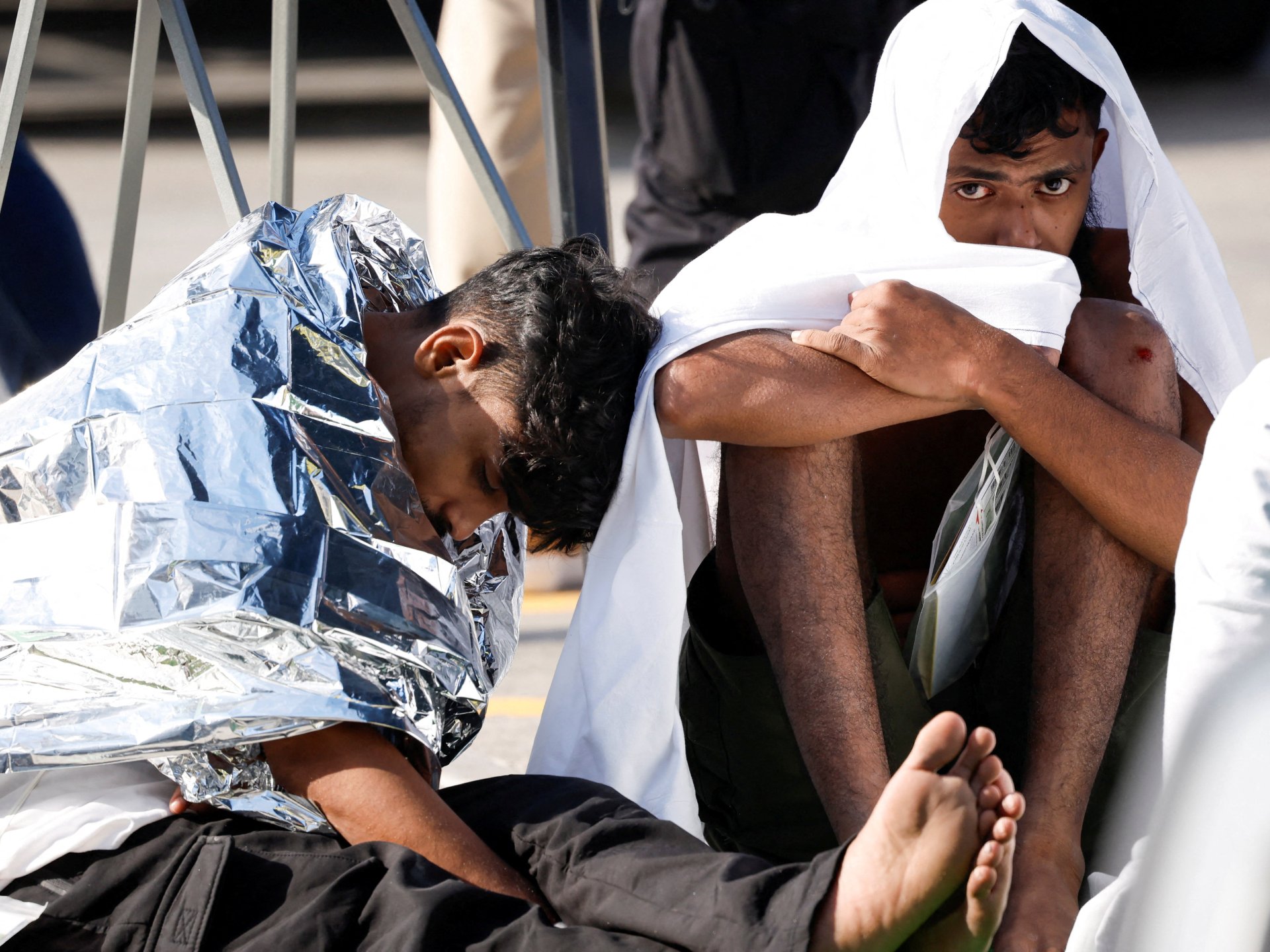

Names marked with an asterisk have been changed to protect identities.
Athens, Greece – Ahmed* was 14 and alone when he first arrived in Germany in 2019 from Afghanistan. He had only the clothes on his back and a phone.
- list 1 of 4Collision between Greek coastguard vessel, migrant boat kills at least 14
- list 2 of 4Syrian swimmer Sarah Mardini cleared by Greek court over migrant rescues
- list 3 of 4Two babies among 53 people dead or missing after boat capsizes off Libya
- list 4 of 4EU votes to allow deportation of migrants to ‘safe’ third countries
end of list
A member of the Hazara ethnic minority, he fled the Taliban’s rule, first reaching Turkiye and then Greece in 2018, before making the journey overland to Germany, where he believed he had a better chance at building a stable life, given Greece’s economic woes.
He is one of an estimated 1.2 million people who claimed asylum in Greece between 2015 and 2020. At the start of the so-called refugee crisis, some European nations embraced refugees, especially those fleeing war in Syria. But now, as the hard right advances across Europe, casting lone, male migrants and asylum seekers as a scourge, they are discriminated against by several sections of society and in the media.
A 2024 report by the International Organization for Migration found that 63 percent of recent arrivals to Europe were single men travelling alone. The Migration Observatory at the University of Oxford in 2026 noted that male refugees often travel alone due to the perils of the journey, and family and children join them later.
Young people like Ahmed also make up a small but significant proportion of applicants. European Union figures from 2024 showed 35,000 asylum applicants were unaccompanied minors. In many cases, families believe that young people have a better chance of reaching Europe and being accepted, according to a 2014 report by the UNHCR.
Ahmed said he sometimes feels as if he is treated as a “threat”, despite his young age and vulnerability.
Advertisement
Ahmed, who is softly spoken over the phone, is in his last year of high school in Germany and hopes to be able to go to university this coming summer. But he speaks of the stigma he has faced as a young male.
“I experience discrimination simply for being a young refugee man,” he said. “My housing applications are ignored because of my name. In society, I hear the tired, hurtful refrain that we are taking jobs and houses, and that the government should pay for their people and not for us. They tell us we should go back where we came from. They also say that we are all the same – dangerous. Sometimes they use irony, saying, ‘Don’t take your knife out; I’ll give you everything you want.'”
He added, “This kind of stuff really hurts because, at least I can speak for myself, I am trying to begin a new life here where I feel safe. We experienced a lot of horrible things in the wars in our country and on the way here … [We’re] not really accepted by society, even though you try your best. This happens simply because your name is Ali or Mohammad and you are seen as a threat.”
Ahmed’s account echoes a broader shift across Europe, where hostile portrayals of migrants have been drawn upon by far-right figures, such as the British convicted criminal Tommy Robinson, who at a September 2025 rally in London said women in the UK were under threat because of “uncontrolled” migration.

Camille Le Coz, director of Migration Policy Institute Europe, said this rhetoric fits a narrative that “we need to close borders to protect ourselves, to protect women from this crime.”
She said this is ironic, because “these are the same political parties who stand for a very patriarchal position of the role of women in society.”
Le Coz said it only takes a “few stories” of criminality from male migrants to “feed into the narrative that young men are dangerous”, even if unsupported by evidence. “This is, of course, then used by the far right to explain that they shouldn’t have been there in the first place.”
‘They think we might be dangerous’
A 2025 study by the German research institute Ifo found no correlation between an increase in migrants and the local crime rate, including violent crimes such as sexual assault.
Ahmed said it feels as though asylum-seeking families have it “a little bit easier”.
“They think there is no threat coming from this person, but for us, they think we might be dangerous.”
Advertisement
He emphasised the array of dangers faced on the migration route.
“Young men like me, when they’re coming, they are misused by other people, smugglers or people who want to sleep with them and lots of other things, so that’s horrible.”
That single asylum-seeking men deserve to be equally prioritised is at the heart of a small organisation situated among the winding streets of the Greek capital that Ahmed once passed through.

Mazi, founded in 2020 in Athens, supports single asylum-seeking men who often find themselves left out of government or NGO housing programmes.
“In the asylum system in Greece, as elsewhere, men transition from a 17-year-old ‘vulnerable boy’ to an 18-year-old ‘threatening man’ on their 18th birthday. This means: No housing, few support services and a dogged perception – from everyone, even those administering humanitarian support – that ‘he’ll be fine on the street for a bit, he’s a man.’ He won’t be fine on the street. That’s why we set up Mazi,” said Cosmo Murray, a co-director of Mazi.
Junior*, 30, left Cameroon, “in search of international protection due to my sexual identity, which is a crime in my country”.
He fears the police are still actively looking for him back home.
Junior was hosted in an apartment provided by Mazi for just more than a year.
“It is very difficult for a single person to find [somewhere] to rest,” he said.
It seemed like men were pushed to the back of the queue for services at refugee camps, he added. “I was surprised [to find Mazi] because most organisations easily take care of couples or women.”
Men are often more vulnerable out on the streets in Greece, pulled up for random identity checks by Greek police, a practice that has been decried by Human Rights Watch as “abusive” and “discriminatory”.

Ibrahim*, 30, from Sierra Leone, was also hosted by Mazi before leaving for France.
He said he prefers France because he had lived in constant fear of being stopped and searched in Greece.
“If you are walking on the streets with a child or wife, it’s harder for the police to control you,” he said.
Venant*, a 38-year-old Cameroonian, has a broad smile and a warm voice, even when he reflects on the worst parts of his journey to Europe. Like Ibrahim, he said he fled because his life was under threat in Cameroon. In late 2022, he arrived in France, where he now has refugee status.
“The treatment is different [as a single male],” he told Al Jazeera. “The system is made in such a way that those who are in a couple are privileged compared to singles.”
Advertisement
He now works at a department store in Paris and has been searching for permanent housing for more than a year. He is currently living in sheltered accommodation in the suburbs.
‘Men, like any other group, need support’
“The prevailing narrative, in the humanitarian context, is that men do not need care and support. The assumption is that men are better able to handle a range of challenges because they are men,” said Meena Masood, a researcher and teaching associate at the University of Manchester whose work focuses on conceptions of racialised men seeking protection in Europe.
“But in reality, of course, men, like any other group, need support.
“These narratives do not just exist in the humanitarian context in Greece; they exist in the discourses of states, media reports, and more, across the world, albeit in different ways.”

Countries across Europe have been accused of scapegoating male asylum seekers.
In 2024, more than 39,600 people applied for international protection in Belgium, the highest in a decade. A new government came to power in 2025, promising hardline migration policies.
In 2023, a state decision to halt reception places for single male asylum seekers angered NGOs. The measure was struck down by the courts, but reports in 2025 suggested single men were still being frequently excluded.
Priscilla Fligitter and Annika Vater at Doctors Without Borders, known by its French initials MSF, in Belgium, told Al Jazeera of an accommodation crisis and said the medical charity was treating people living on the streets, in squats or temporary accommodation for a variety of conditions.
“There is a huge dark number of sexual violence assaults against men. Already on the migration route, many of them have gone through torture as well as sexual violence,” said Vater. “It’s a myth that men are immune to everything.”
Related News
US judge orders release of five-year-old and father from ICE detention
Judge blocks US gov’t move to end deportation protections for Ethiopians
Deadly drone attacks on civilians continue in Sudan’s Kordofan, UN says