Israel’s Eisenkot offers immediate talks with Netanyahu to test seriousness
 28 November 2026
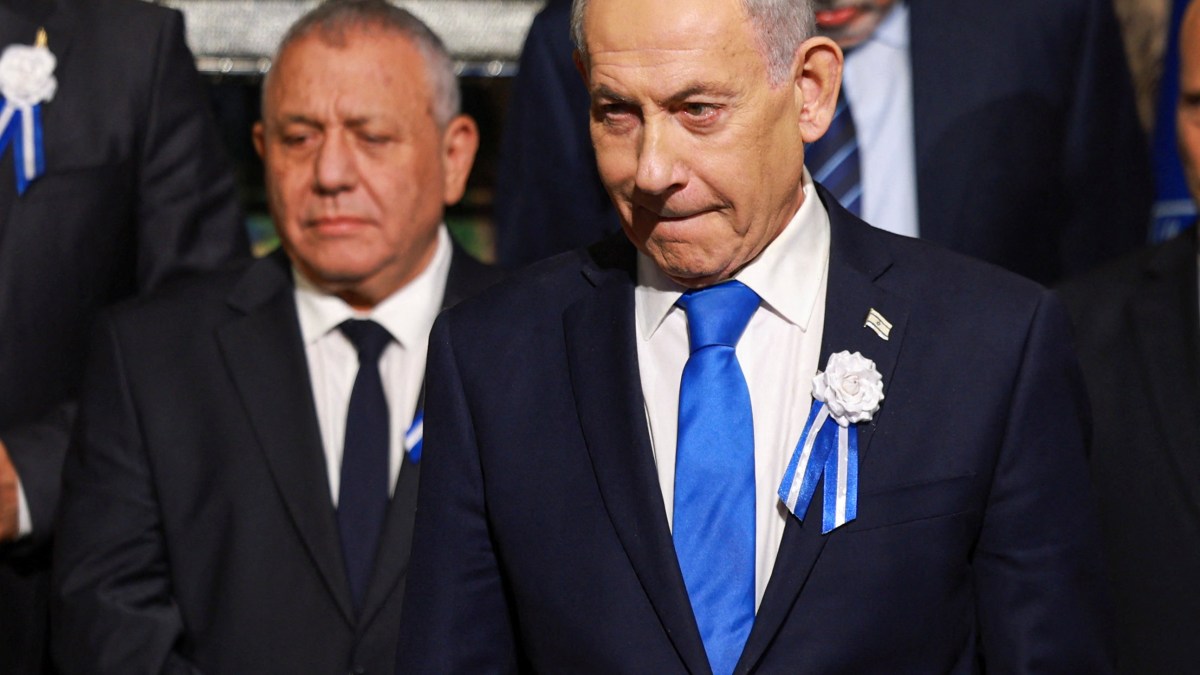

Prime Ministerial hopeful Eisenkot proposes talks with Netanyahu to test whether Likud is ‘ready for genuine unity’.
Israel’s caretaker Prime Minister Benjamin Netanyahu has proposed a rotating premiership with his main rival Gadi Eisenkot, who responded by offering immediate talks to see if the Likud leader is serious about a proposal for the country’s future government.
“If Likud is ready for genuine unity, I am prepared to see how serious it is over the next 24 hours,” Eisenkot said in a statement. He invited Netanyahu to join him on Saturday night “to conduct genuine and accelerated negotiations on basic guidelines and policy issues” – based on a proposal that was delivered to Netanyahu on Sunday but that he has yet to respond to.
Recommended Stories
list of 3 items
- list 1 of 3Israeli ‘direct hit ‘on Doctors Without Borders Gaza clinic kills 2 staff
- list 2 of 3Violence erupts at anti-government protests in Albania
- list 3 of 3Dozens reported killed in series of Myanmar air attacks
end of list
Shortly after, Netanyahu’s party said he would meet Eisenkot for coalition talks early on Sunday.
Eisenkot is the leader of the centrist Yashar party and was tapped by Israel’s president to form a new government.
Earlier on Saturday, Netanyahu said on X that he was willing to let Eisenkot serve first as prime minister in a rotating premiership agreement as part of a unity government.
He said that with Likud being the largest in the country, he should “naturally” lead the unity government, but he would be willing to abandon that principle this time.
“Given the gravity of the existential danger and the possibility that a government will be formed that lacks the ability to confront it, my responsibility as a leader requires me to set everything aside, including the principle of the largest party, and agree that Gadi Eisenkot will serve first as prime minister, while I will serve as alternate prime minister at the beginning of the term,” Netanyahu said.
Advertisement
Eisenkot had pledged on Friday to announce the formation of Israel’s next government by the official deadline of December 6, without using the option of a 14-day extension.
He also accused Netanyahu of stalling coalition talks in a bid to bring about new elections. The prime ministerial hopeful has so far struggled to put together a ruling coalition.
Al Jazeera’s Nour Odeh, reporting from Bethlehem in occupied West Bank, said that Eisenkot’s call for immediate talks was aimed at judging Netanyahu’s seriousness.
“Many see that as Eisenkot’s way of calling Netanyahu’s bluff to see if he’s really willing to talk substance or if he just wants to buy time,” she said.
‘Deceitful tactics’
The October 27 elections failed to deliver a clear majority for either bloc.
Netanyahu and his traditional alliance of far-right and ultra-Orthodox parties won 53 seats, short of a majority in the 120-seat parliament, while Eisenkot and his presumed partners won 48 seats.
Netanyahu’s announcement underscores the pressure he also faces as Eisenkot wins support from potential partners that could hand him a governing majority or allow him to form a coalition government.
After his proposal, the leader of the Democrats group, Yair Golan, who has also publicly opposed any unity formula with Netanyahu in the past, rejected the latest offer.
“Enough tricks and deceitful tactics, Netanyahu has lost and our duty is to respect the will of the voter and form a government of change and rescue,” he posted on X.
Yousef Jabareen, leader of the Joint List, which is an alliance of Arab-led parties, also said that Netanyahu was attempting to thwart a change of government.
“The democratic majority has decided: this blood-stained, neglectful government must go,” he wrote on X. “It is time to fulfil the shared will of the entire public, Jews and Arabs alike, and remove Netanyahu this very week.”
Related News
Melania Trump calls for peace at meeting with Russia, Ukraine officials
Democrat Jon Ossoff wins Georgia US Senate race
Pakistan’s PTI demands access to jailed Khan after overnight hospital visit