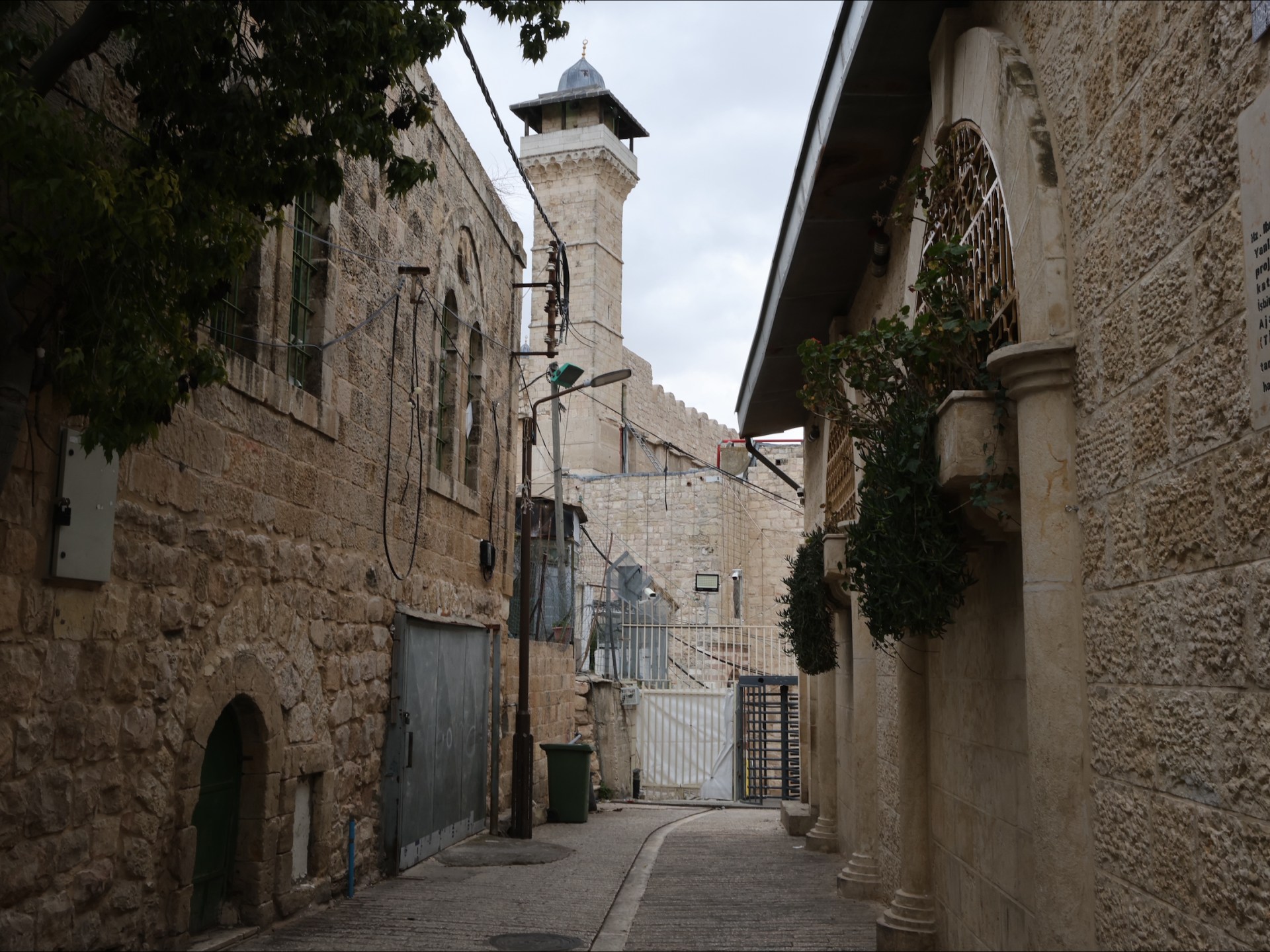

Israel has seized planning and construction powers at the Ibrahimi Mosque in the occupied West Bank from Palestinian authorities, scrapping parts of an agreement in place since the 1990s, Finance Minister Bezalel Smotrich said on Tuesday.
Under the 1997 Hebron Agreement, Palestinians controlled planning and construction in the entire city of Hebron, including the Jewish Tomb of the Patriarchs and the adjoining Ibrahimi Mosque.
- list 1 of 3‘Torture isn’t new to Palestinians’: How Israel learned from colonialism
- list 2 of 37-month-old baby shot by Israeli soldier in Hebron
- list 3 of 3West Bank ethnic cleansing, settler attacks Israel’s state policy: Amnesty
end of list
“Yesterday we cancelled the Hebron agreements,” Smotrich said at an inauguration ceremony for the Doran settlement in the southern Mount Hebron area.
While the decision was made on Monday night by Israel’s Higher Planning Council, Israel’s Foreign Ministry said in a tweet that “contrary to the finance minister’s statements, the Hebron Agreement was not canceled”.
It added that a cabinet decision made months ago had addressed planning and construction authority in the Jewish settlement and at Jewish heritage sites only, citing what it called a complete lack of cooperation from the Hebron municipality.
“Beyond that, no change has occurred,” it said.
The Palestinian Authority, meanwhile, condemned Smotrich’s announcement as unlawful.
“Such unilateral measures are unacceptable and constitute a violation of the agreements signed by the Israeli side, as well as international law,” the office of President Mahmoud Abbas said in a statement, calling on the international community and the United States in particular to intervene immediately to stop “this most dangerous step”.
Advertisement
Hebron Mayor Yusuf al-Jabari said the agreements constitute “a political framework governing Hebron’s administrative, security and service arrangements”, and that any unilateral modification outside existing international understandings amounted to “a serious breach” with far-reaching consequences.

The Hebron Agreement, signed by Prime Minister Benjamin Netanyahu and former PLO chairman Yasser Arafat, divided the city into two sectors.
Israel retained security control over H2,which includes the Jewish settlement and the Ibrahimi Mosque, also known as the Cave of the Patriarchs, while civil powers, including planning and construction, remained with the Palestinian municipality.
The mosque has long been a focal point for settlers, who took control of half the site following the original protocol. In 2017, Palestine inscribed Hebron’s Old City and the Ibrahimi Mosque on the World Heritage and World Heritage in Danger lists maintained by the United Nations Educational, Scientific and Cultural Organization (UNESCO).
“After the government promised victory and failed on all fronts, Smotrich the pyromaniac is trying to set the West Bank on fire,” said Israeli peace group Peace Now, adding that the move was politically motivated.
“This is a dangerous and irresponsible step of a failed politician who is ready to harm Israel’s interests and security in order to gather a few votes from the extreme right,” it said.
Palestinians say the move is the latest in a series of steps towards Israel’s de facto annexation of the West Bank.
Related News

Why is France so invested in the future of Lebanon?

Trump says ships ‘starting to move’ through Strait of Hormuz

Air India Flight 171 crash: Grieving families wait for justice a year later