Iran says US military build-up ‘unnecessary and unhelpful’, deal achievable
 20 February 2026
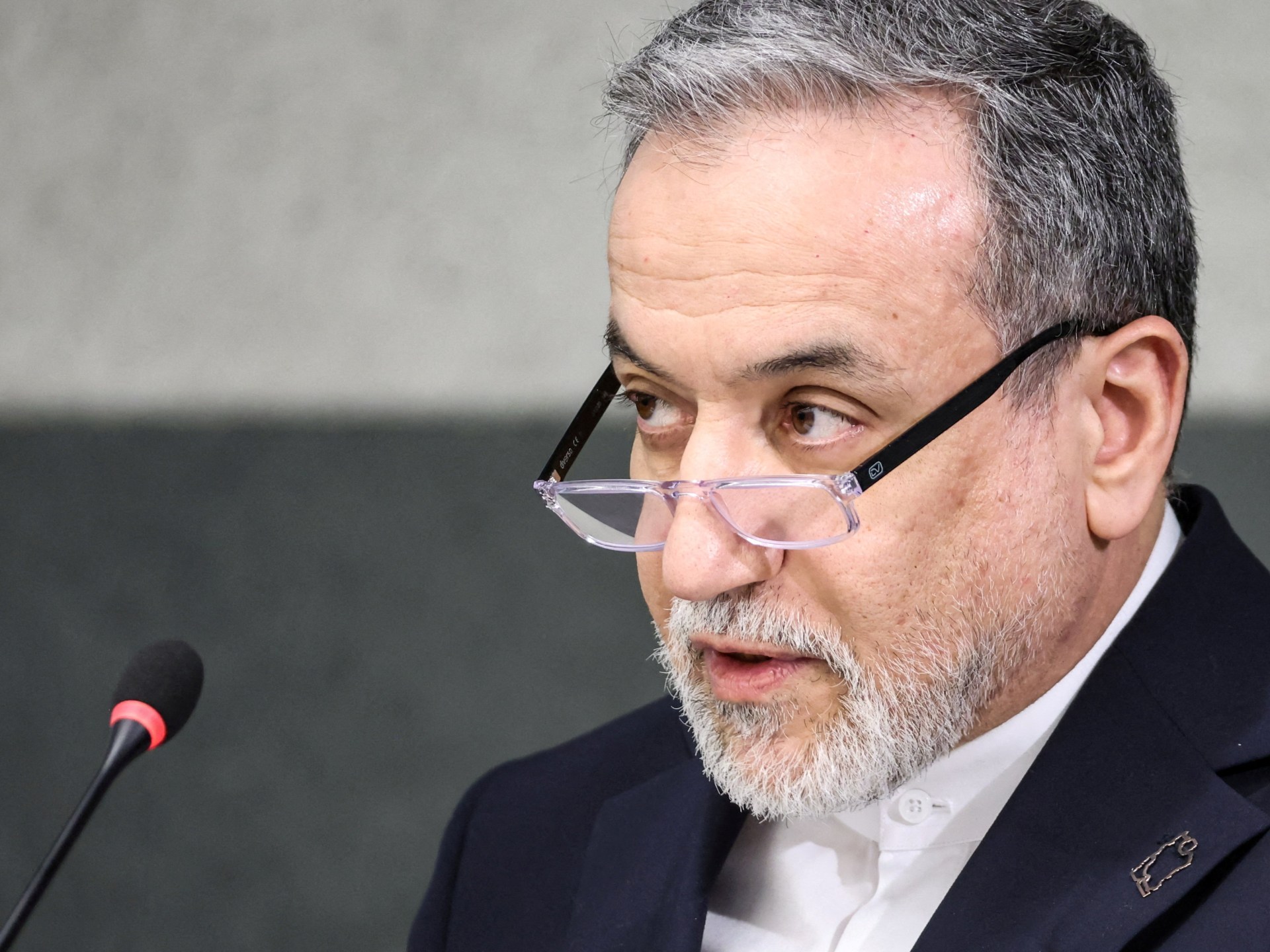

Iranian Foreign Minister Abbas Araghchi has said that Iran is “prepared for peace” and diplomacy with the United States, suggesting that a possible deal between the two countries remains close despite the threats from Washington.
Speaking to the US television network MS NOW on Friday, Araghchi stressed that Iran’s nuclear programme has no military solution.
- list 1 of 3Tracking the rapid US military build-up near Iran
- list 2 of 3Iran builds concrete shield at military site amid acute US tensions
- list 3 of 3Iran says US risking ‘crisis’ as Trump sets ’10, 15 days’ deadline for deal
end of list
“A diplomatic solution is at our reach; we can easily achieve [it],” Araghchi said.
He hit out at the enormous US military build-up in the Middle East, which includes two aircraft carriers and dozens of fighter jets, calling it “unnecessary and unhelpful”.
“I have been in this business in the past 20 years and negotiated with different parties. I know that a deal is achievable, but it should be fair and based on a win-win solution,” the top Iranian diplomat said.
“[The] military option would only complicate this, would only bring about disastrous consequences – not only for us, perhaps for the whole region and for the whole international community.”
Hours after Araghchi’s interview, US President Donald Trump was asked about the possibility of limited strikes against Iran to boost Washington’s negotiating position.
“I guess I can say I am considering that,” Trump told reporters.
But Araghchi had warned that Iranians are “proud people” who only respond to the “language of respect”.
“Previous US administrations, even the current US administration, have tried almost everything against us – war, sanctions, snapback and everything, but none of them worked,” he said.
Advertisement
The US and Iran have held two rounds of talks over the past month, and officials from both countries have described the negotiations as positive.
Still, the Trump administration has continued to amass military assets around Iran.
On Thursday, the US president said Tehran has 10 days to reach a deal with Washington. He later extended the deadline to as many as 15 days. Last week, he said an agreement should be finalised over the next month.
Trump has also been regularly issuing threats to Iran, including warning of “something very tough” and “traumatic” consequences for the country.
The US joined Israel’s assault on Iran in June of last year and bombed the country’s three main nuclear facilities.
Trump and Israeli Prime Minister Benjamin Netanyahu have said that the strikes “obliterated” Iran’s nuclear programme.
Tensions between Washington and Tehran spiked again late last year, when Trump threatened to renew strikes against Iran if it rebuilds its nuclear programme or missile arsenal.
The status of Iran’s nuclear programme has not been confirmed by international monitors, and the whereabouts of the country’s highly enriched uranium remain unknown to the public.
Tehran has insisted on its right to uranium enrichment, which it says does not violate its commitments under the Treaty on the Non-Proliferation of Nuclear Weapons (NPT).
But Trump and his top aides have previously said that they want Iran to entirely dismantle its nuclear programme.
Enrichment is the process of isolating and garnering a rare variant-isotope of uranium that can produce nuclear fission.
At low levels, enriched uranium can be used to power electric plants. If enriched to approximately 90 percent, it can be used for nuclear weapons.
Iran, which denies seeking a nuclear bomb, has said it is ready to place rigorous monitoring and limits on its enrichment operations, but not give up the programme entirely.
On Friday, Araghchi said, “The US side has not asked for zero enrichment,” which appears to contradict the Trump administration’s public stance.
The Iranian foreign minister said the next step in the talks will be for Iran to submit a written proposal for a deal to US negotiators, led by Trump’s envoy Steve Witkoff, then the two sides can finalise the text of the agreement.
“We agreed on a set … of guiding principles for our negotiation and how a deal can look like,” Araghchi said.
“And we then were asked to prepare a draft of a possible deal. So next time that we meet, we can go into that draft and start negotiating about its language and hopefully, come to a conclusion.”
Advertisement
Related News
Bangladesh votes in first election since 2024 uprising that toppled Hasina
The cost of genocide: Israel’s war on Gaza by the numbers
Thai PM Anutin’s party takes early lead in general election race