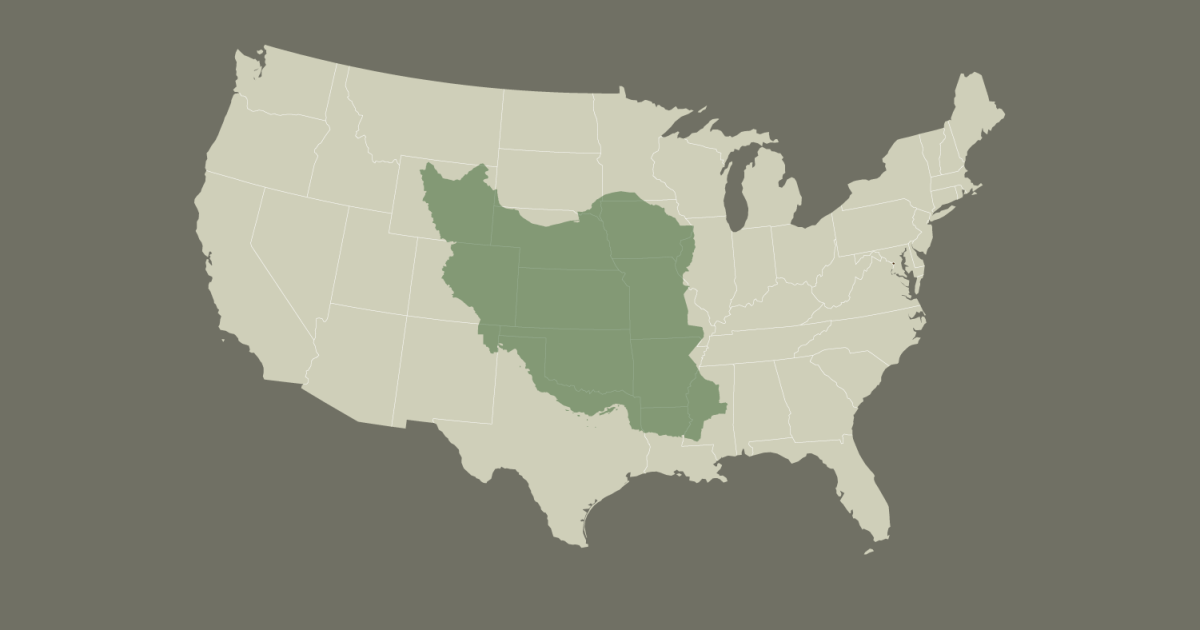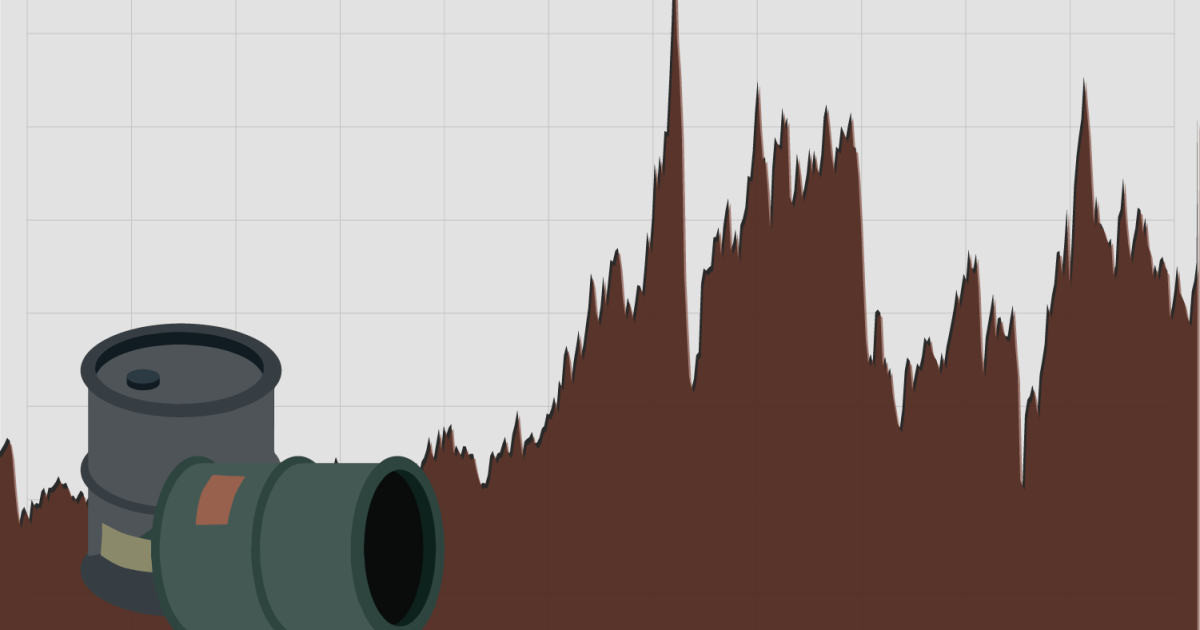

For the first time since Russia’s 2022 invasion of Ukraine, the price of oil skyrocketed past $100 per barrel this week, driven by ongoing energy uncertainty after the United States and Israel’s war on Iran began on February 28.
About 20 percent of the world’s oil comes from the Gulf region, and most of it is shipped on massive tankers through the Strait of Hormuz. This narrow waterway, located between Iran and Oman, is only 21 nautical miles (39km) wide at its narrowest point.
More than 20 million barrels transit through the strait per day, which is one-fifth of global petroleum consumption and accounts for one-quarter of all oil traded by sea.

According to the US Energy Information Administration (EIA), more than three-quarters of the world’s oil supply (79.8 million barrels per day) travels by sea, funnelled through a handful of critical chokepoints with no easy transit alternatives.
Why are oil prices surging?
Since the Iran war began, marine traffic through the Strait of Hormuz has nearly ground to a halt. Attacks on vessels and interference with navigation equipment have pushed most operators to anchor their ships at the waterway’s edge rather than risk the crossing.
Without the flow of this oil, global supply chains are severely disrupted. With a limited supply and rising demand, prices are likely to increase, putting pressure on consumers and businesses.
While prices briefly dipped on Monday after US President Donald Trump said, “The war is very complete, pretty much,” analysts warned that high prices could persist if no agreement is reached between Washington, Tel Aviv and Tehran to stop the war.
Advertisement
“It’s all about risk,” Ismayil Jabiyev, supply chain analyst at CarbonChain, told Al Jazeera.
“Think about the Strait of Hormuz and cheap drones. It’s not a physical blockage – Iran hasn’t built a wall across the sea. It’s all about risk. Cheap drones will always pose a risk, even if all the launch sites are destroyed because hidden drone launches could continue for months. As long as hostilities continue, the disruption is likely to persist. I don’t see any real progress or resolution on the horizon,” Jabiyev added.
Which countries rely most on Middle Eastern oil?
About 89 percent of the oil that flows through the Strait of Hormuz is bound for Asian markets with China, India, Japan and South Korea the top buyers.
If traffic remains restricted, Gulf exporters will be forced to seek alternative routes, but options are limited with Saudi Aramco’s East-West Crude Oil Pipeline and the United Arab Emirates’s Abu Dhabi Crude Oil Pipeline (Habshan-Fujairah pipeline) offering a capacity of about 4.7 million barrels per day (bpd).
The Saudi pipeline runs from eastern oilfields to the port of Yanbu on the Red Sea, one of the few arteries that bypasses the strait entirely. However, of the 7.2 million bpd that Saudi Arabia exported in February, 6.38 million bpd relied on passage through the strait, according to Kpler, a global trade data and analytics firm.
Gavekal Research, an independent macroeconomic research firm, estimated that Gulf exporters, including Iran, could reroute at most an additional 3.5 million bpd to terminals outside the strait. But as long as the bulk of tanker traffic remains suspended, the world would still be facing a sudden supply shortfall of about 15 million bpd.
“I’m somewhat sceptical about those alternatives. Yes, the East-West pipeline and the Fujairah pipeline exist, but capacity-wise, they don’t come close to the main route.” Jabiyev told Al Jazeera.
“There’s also the Kirkuk-Ceyhan pipeline from Iraq’s northern provinces to Turkiye, but that’s limited to northern field production. The major Iraqi output comes from the southern fields, so again, it’s a partial replacement, not a full one.”
What is the highest oil price ever recorded?
Oil prices rose to their highest levels during the global financial crisis. On July 11, 2008, Brent crude, the European benchmark, hit $147.50 per barrel while West Texas intermediate crude, the US benchmark, hit a peak of $147.27. That spike was driven by a mix of a weakening US dollar and a massive influx of speculative money rather than a physical disruption to supply.
Advertisement
Throughout history, there have been a handful of energy market shocks when oil supplies were actually threatened, most notably the 1973 oil embargo, the Iran-Iraq War in the 1980s, the 1990-1991 Gulf War, the 2003 US-led invasion of Iraq and the 2022 Russian invasion of Ukraine.

“I think the Gulf War of 1990-91 is the most instructive comparison. Iraq and Kuwait together represented two major producers, and the disruption was serious and prolonged – lasting roughly half a year or more, even though the military phase was fairly brief,” Jabiyev told Al Jazeera.
“The world experienced high crude oil prices for an extended period and eventually faced some economic slowdown as a result. That makes it most analogous to our current situation: a likely long-term disruption, sustained high prices and a meaningful risk of economic slowdown. The key variable, as in 1990, was how quickly the affected countries could restore their production infrastructure and bring supply back online.”
How does crude oil become petrol?
Crude oil is a yellowish-black fossil fuel pumped from the ground and refined into fuels like petrol, diesel and jet fuel. The refining process also produces numerous household items.
Oil is graded by thickness and sulphur content. Light, sweet crude is low in sulphur and easy to refine and thus more valuable. After extraction, crude oil is sent to refineries where heat separates it into products. Lighter fuels form at lower temperatures while heavier products, such as asphalt, require much higher heat.
A barrel contains 159 litres, or 42 gallons, of crude oil. Once refined, a barrel typically produces about 73 litres, or 19.35 gallons, of petrol to power cars and trucks.

What products are made from oil and gas?
Oil and gas are used for far more than just fuel. They are raw materials for thousands of everyday products.
Plastics, including water bottles, food packaging, phone casings and medical syringes, are all derived from crude oil.
Crude oil is also the hidden ingredient in synthetic fabrics, such as polyester, nylon and acrylic, which is in everything from sportswear to carpets. It also underpins the cosmetics industry in products that include petroleum jelly, lipsticks and concealers.
Household items also rely on oil-based ingredients with laundry detergents, dishwashing liquids and paints all derived from petroleum products.
The global food supply is essentially built on natural gas in the form of fertilisers, used to enhance crop yields and ensure that food production can meet demand.

How high oil costs drive up the price of food
Oil prices and food prices move in lockstep with energy prices affecting every stage of the food supply chain from the fertilisers used in the fields to the trucks that carry food from the fields to supermarket shelves.
Rising oil prices directly affect shipping and the cost of transportation.
“The lifeblood of the global economy is transport,” economist David McWilliams told Al Jazeera. “It’s getting stuff from A to B. It’s a logistics problem, a supply chain problem, and ultimately, transportation is the energy of the global economy.”
Advertisement
Fears of stagflation – rising inflation and rising unemployment, which major oil shocks have historically summoned – are rising. Economists pointed to the crises of 1973, 1978 and 2008 as evidence that every significant spike in oil prices has been followed, in some form, by a global recession.
In lower-income countries, where populations spend a far greater share of their income on food and import large quantities of grain and fertiliser, rising oil prices could rapidly translate into food shortages.

Related News

Pakistan warplanes bomb Kabul as clashes with Afghanistan intensify

At least 23 dead as heavy rains unleash floods in southeastern Brazil

Venezuela reports over 3,200 people fully released under new amnesty law