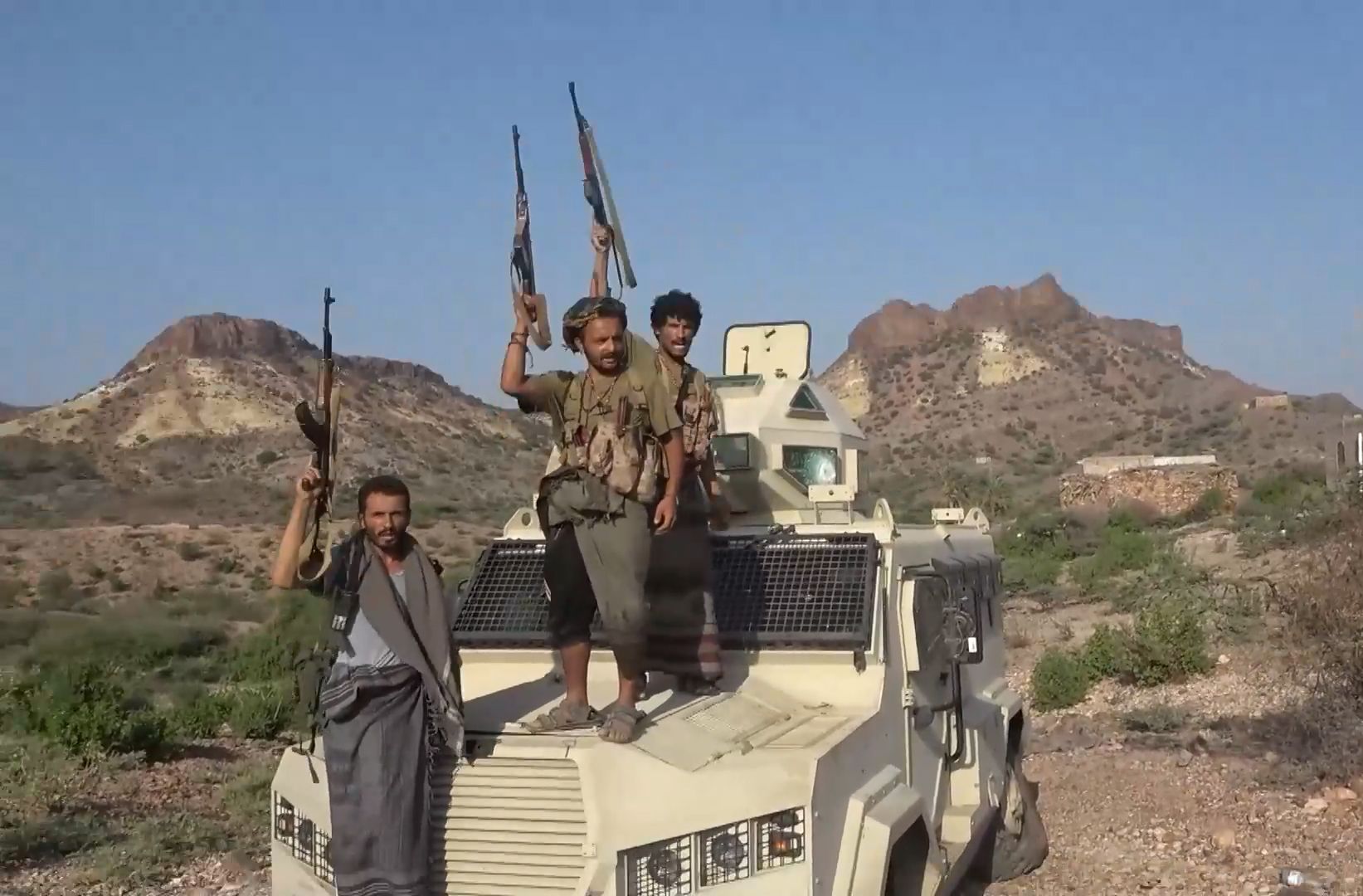

Sanaa, Yemen – Mohammed, 19, joined the fighting on Yemen’s Red Sea coast in March this year, battling alongside Houthi forces. The fighting has been relentless over the past few months, as the Houthis advance. The Houthis have faced pro-government forces, as well as Saudi-led coalition air strikes.
They have also faced international sanctions and attempts by Saudi Arabia and the Yemeni government to restrict their access to funds.
- list 1 of 3Siege fuels disease fears in Yemen’s Taiz
- list 2 of 3Houthi advance on Aden may spur resurgence of Yemen’s southern separatists
- list 3 of 3Yemeni parliament approves law designating Houthis as ‘terrorists’
end of list
And yet, speaking during a recent visit to Sanaa, Mohammed said the Houthis were able to continue getting supplies to their fighters.
“It is not always war and death on the battlefield. We have a good time. We eat the best food. We can chew khat. If injured or sick, we will be taken care of. Our commander on the ground makes sure we have the supplies we need,” Mohammed told Al Jazeera.
Throughout a decade of war, Yemen’s Houthi group has developed a range of funding streams, which have enabled it to finance its military operations and tighten its grip on areas under its control.
The Mokha Center for Strategic Studies said in a July report this year that the Houthi financial system generates direct and indirect financial resources and costs worth approximately $2.5bn annually.
That includes around $800m from taxes and customs, $600m from additional fees and levies, $300m from cash and in-kind contributions to the war effort, and about $100m linked to mobilisation events, according to the report.
A May research paper from the same institution estimated that nearly 60 percent of collected revenues in Houthi-controlled areas are directed to the security and military sectors.
Diverse funding techniques
As the Houthis’ war grinds on against Yemen’s internationally recognised government and Saudi-led coalition forces, Houthi authorities have employed more fund-generating techniques. Ali Naji, a Sanaa resident, often receives messages on his mobile phone, urging him to contribute to the missile and drone air forces.
Advertisement
“I do not contribute, but thousands of people do, even with 100 Yemeni riyals [$0.19 at the exchange rate set by Houthi authorities in Sanaa]. When these small contributions add up, they make millions, and this funds the war efforts,” Naji, a father of three, told Al Jazeera.
Another method is distributing envelopes to solicit contributions. Last week, Naji was watching the funeral procession of more than 40 civilians who were killed in Sanaa in what the Houthis said were Saudi air strikes.
A Houthi member approached him and handed him an envelope, requesting that he give a voluntary contribution to the war effort. “I did not feel comfortable refusing or returning it empty. I put 1,000 Yemeni riyals (around $1.90) inside the envelope and gave it back.”
When mass rallies are held, a large sheet of cloth is spread on the ground, and people can contribute what they can. “Some give cash. Some donate weapons such as rifles and pistols, or jambiyas [traditional daggers]. From one rally, millions of Yemeni riyals can be raised,” said Naji.
In addition, imported oil has been a major source of revenue for the Yemeni group. In January, the US Department of the Treasury said the Iranian government sold and provided a free monthly shipment of oil to the Houthis using Iranian-owned or affiliated companies based in Dubai, in the United Arab Emirates.
With the shipments of Iranian oil, the Houthis continued to acquire a significant amount of revenue through illicit oil sales, generating over $2bn annually, according to the US Department of the Treasury.

Financing recruitment
Yazeed Al-Jeddawy, a research manager at the Sanaa Center for Strategic Studies, told Al Jazeera that the Houthis have established a self-reinforcing system in which “economic control finances coercion, and coercion enables further economic control”.
Their income sources include taxes, customs duties, zakat religious levies, and additional levies, and fuel and telecommunications, said Al-Jeddawy.
“Their control over import permits, fees, and access to foreign currency also gives them considerable leverage over traders and businesses. These resources sustain the security apparatus and patronage networks through which the movement enforces compliance and consolidates its authority,” he added.
Al-Jeddawy noted that the Houthi financial system supports recruitment amid shrinking employment opportunities and unpaid public-sector salaries.
Advertisement
“Joining Houthi forces has become one of the few sources of income available to some young men. Recruitment is accompanied by ideological indoctrination, extending the movement’s influence from military camps into families and local communities. Economic deprivation therefore does more than facilitate mobilisation: it helps the group militarise everyday life and reinforce their authority at the social level.”
A 2024 United Nations panel of experts estimated that Houthi fighters numbered around 350,000, bolstered by the recruitment of fighters sometimes aged under 18.
These resources fund more than recruitment and mobilisation. “The group has expanded its security apparatus, developed increasingly sophisticated weapons, and invested in fortifications, trenches, tunnels, underground facilities, and weapons workshops. This level of continuous militarisation requires considerable and sustained expenditure,” said Al-Jeddawy.
The cost to civilians
Wafiq Saleh, an economic researcher and executive director of the Taiz Centre for Yemeni-Gulf Studies, said Houthi-run civilian institutions are starved of funds, salaries are not paid regularly, and basic services, such as health and education, continue to deteriorate.
“About one million Yemeni public employees have not received their salaries regularly since 2016. Meanwhile, the group has developed its arsenal and funded its war efforts. When war is a priority, the living conditions of the population become miserable,” Saleh told Al Jazeera.
Roughly 80 percent of the population in Yemen lives below the poverty line, and nearly 22.3 million people depend on some form of humanitarian assistance, according to United Nations reports.
For Mohammed, the Houthi soldier, funding military operations is “a duty” and “a long-term investment”.
“Liberating the country and expelling foreign forces is not free,” said Mohammed. “So, funding fighters and military operations should be every patriot’s priority.”
Related News

‘I pay $500 for 5 square metres’: Spain’s protesters, in their own words
South Africa’s ANC on track for new lows in local polls
Tens of thousands build 108 Buddhist stupas for Bhutan ‘mindfulness’ city