
Nearly four years ago, Russian President Vladimir Putin announced on national TV that the country’s armed forces had begun a full-scale invasion of Ukraine.
The war, known by its official euphemism of “special military operation” (SMO), has now lasted longer than Russia’s involvement in World War II from 1941 to 1945. Russian combat deaths, verified by the BBC and the independent Russian outlet MediaZona, have now topped 186,000 – nearly 13 times the Red Army’s losses during the entire 1980s war in Afghanistan, which lasted a decade and included soldiers from across the Soviet Union.
But while millions of Ukrainian refugees have fled and those who remain brave a bitter winter as Russian missiles batter the country’s energy infrastructure, how have the past four years changed Russia? Al Jazeera spoke with people inside and outside the country to learn how life has changed since February 24, 2022.

Life goes on
Areas of western Russia bordering Ukraine, such as the Kursk and Belgorod regions, have come under artillery barrages, drone strikes and even ground incursions from Ukrainian forces with part of Kursk falling under Ukrainian control temporarily.
“Just over a year ago whilst Ukrainian forces were still in this region, you’d get strikes multiple times per day,” said 25-year-old Ben Higginbottom, better-known as YouTuber Ben the Brit, who moved to Kursk with his Russian wife in 2021.
“I think what might shock people is how used to it locals became and me included in that. Nobody ran to shelters with each strike. Otherwise, you’d never be able to live your life. You’d always be in there.”
Advertisement
According to the local news site Fonar.tv, at least 458 civilians have been killed in Ukrainian attacks on the Belgorod region since the war began.
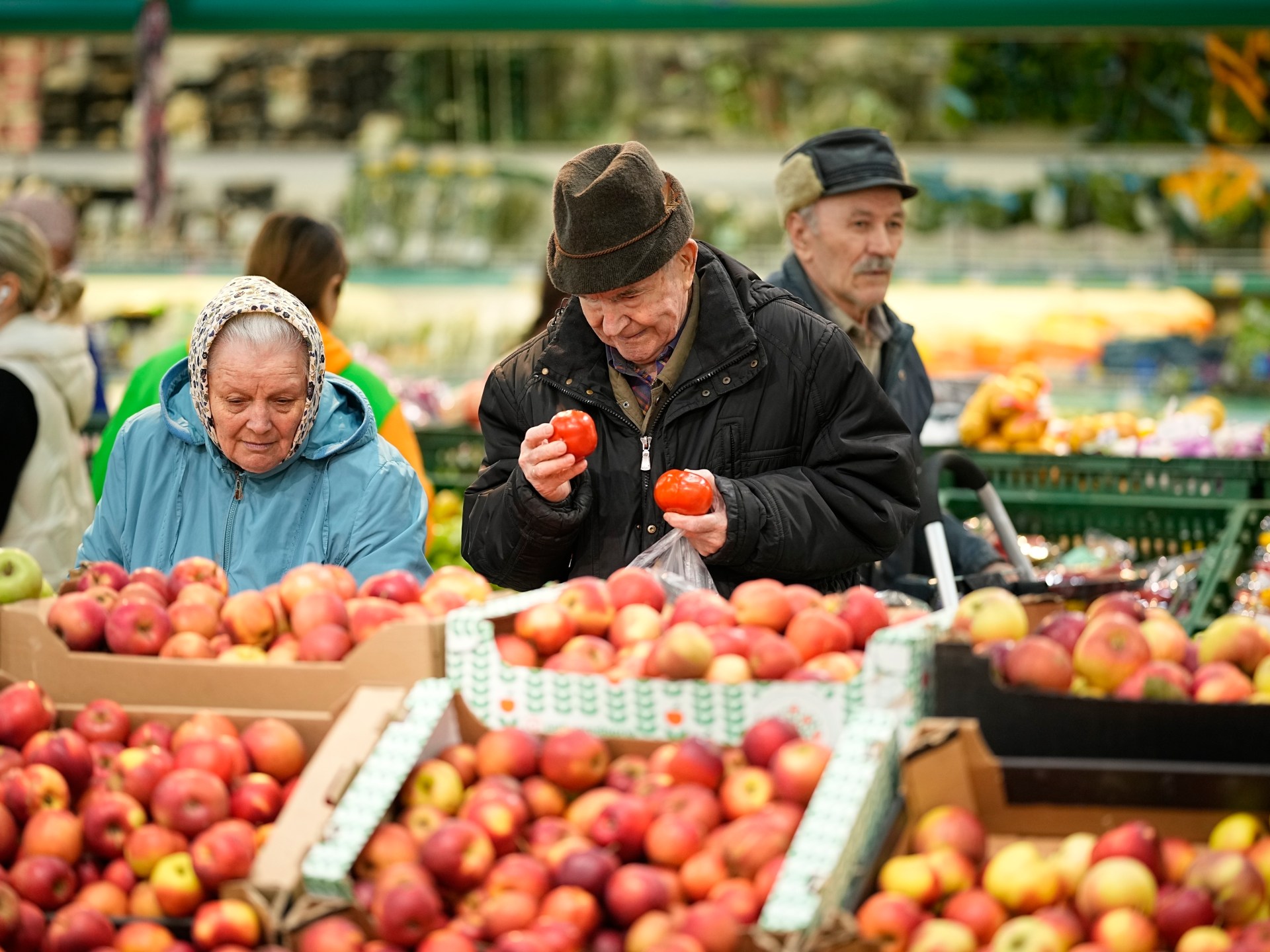
But major metropolises, such as Moscow and St Petersburg, have barely felt the war while the sanctions imposed by Ukraine’s Western allies are mere inconveniences.
“It’s so expensive. I’m in shock,” said Andrey, a 30-year-old Muscovite.
“It’s just like Europe – everybody’s complaining about the prices there too. Even if you only buy some beer, cigs and chocolate, you still wind up spending at least 1,000 roubles [$13] at the store. But in Moscow, people’s purchasing power hasn’t obviously fallen much. Kids are crowded in lines at supermarket cafes. The whole city is full of taxi drivers and endless delivery drivers.”
Some things have changed.
“It became very problematic to find some brands that you used to buy before,” said Kirill F, a 39-year-old photographer from St Petersburg who requested that his full name not be disclosed.
“They can be found from resellers, but they’ve become more expensive, and they’re no longer sold in stores,” he said. Some South Korean brands have returned to Russia, he said. LG washing machines and refrigerators are now available again.
Chinese brands are also available, but they are “not as good quality as the tech we used to get from Germany or Poland”, Kirill said.
To get around overseas payment restrictions because of Western sanctions, for example on apps, Kirill opened a bank account in Kyrgyzstan. It’s not an insurmountable obstacle but an annoyance, he said.
But Kirill is less sanguine about the restrictions imposed by his own government. Since 2022, the Kremlin has introduced strict laws penalising what it calls “fake news” about the invasion. Additionally, the authorities have blocked social media such as Instagram and Facebook and made it harder to use WhatsApp, Telegram and YouTube, promoting state-backed alternatives such RuTube and the messaging app Max instead.
“At first, we were blocked from using Facebook, but we had few people using it and they just installed VPNs, and then YouTube was banned,” Kirill recounted.
“For ordinary citizens, this blockage just worsens life. That’s all. Younger people perceive it as a violation of their personal life, and they will grow up hating the state.”

Opinion polls consistently find the war enjoys widespread support among the public although analysts cautioned that laws criminalising antiwar sentiment make it hard to judge the accuracy of these polls.
Advertisement
The brother of 30-year-old Vladislav from Saratov in southwestern Russia enlisted as a drone pilot in the Russian forces a month ago. The Russian military now attracts plenty of recruits through generous pay packets rather than relying on conscripts.
“At first, I thought [the war] was wrong, like what ‘denazification’ are you talking about?” Vladislav told Al Jazeera via Telegram before hastily deleting his messages. The Kremlin has described the Ukrainian leadership under President Volodymyr Zelenskyy as pro-Nazi, and has insisted that its military operation is driven by a desire to “denazify” Ukraine.
“But then the Ukrainian side started posting photos of swastikas, SS skulls and other symbols of fascist ideology,” Vladislav said, referring to symbols that have appeared on some Ukrainian soldiers’ uniforms and unit flags. “… Both my grandparents were WWII veterans; may they rest in peace.”
Now, he said, he agrees with Russia’s war on Ukraine. “Zelenskyy and his entire fascist fraternity must be destroyed, no more prisons. … I hope my brother will make a huge contribution,” he added. “He’s a great guy, an excellent driver, and the fact that he spent so much time playing simulation games will help him defeat every Nazi scum in Ukraine.”
Kirill, too, had his doubts about the invasion, considering the outbreak of war a failure of Russian diplomacy, and still shakes his head when he sees Russian pro-war symbols in public.
But as time went on, his attitude towards both peace and liberals grew more jaded.
“We read both the foreign press and the liberal analysts, who told us the Russian economy had two weeks left, yet here we are four years later, and everything’s fine. What do you think our attitude will be towards the people who told us such things?” he asked rhetorically.
“I believe that since it’s already begun, we need to go all the way to victory,” Krill added. “If you started a fight, you can’t just say ‘I’m sorry’ and stop. That is to say, I don’t support [the invasion], but I also don’t support reparations, all this nonsense. No one will go for it. Even among those who are against the war, they don’t want to lose completely because their lives will be adversely affected.”
Then there’s the question of apathy. Historically, many Russians have concerned themselves more with day-to-day survival than the machinations of power, a trend that has continued with the “special military operation”.
“Everyone’s in denial. Almost everyone in my circles is staunchly apolitical and tries to ignore the news,” Andrey observed.

Going AWOL
But denial is impossible for some.
Seeing the carnage up close made Alexander Medvedev* change his mind. Having completed both his national service, a 12-month mandatory draft, and a previous deployment to Syria, the 38-year-old trucker from Kemerovo in Siberia was mobilised into the elite Ural Battalion, where he was assigned the post of machinegunner in a support platoon.
Advertisement
“We’d been told for years that everything in Ukraine was steeped in Nazism and hatred of Russia and Russians,” he told Al Jazeera.
“At the time, I thought and assumed this was a punitive operation aimed at the regime in that country than at the Ukrainian people as a whole.”
By January 2023, Medvedev’s unit entered the Luhansk region of eastern Ukraine, setting up base in an abandoned mine. Medvedev considered himself lucky to have been assigned to a support platoon because the assault squads “suffered 60 or 70 percent casualties in an hour of combat”.
Travelling through war-torn Ukrainian villages and speaking with the locals, Medvedev began questioning his mission. “The realisation that I was fighting a war that no one needed, that would bring no good to anyone in this world but would only produce a mountain of corpses, widows, orphans and miserable mothers and fathers haunted me,” he told Al Jazeera.
On July 7, 2023, he went AWOL and tried to return to his hometown.
“For the first few months after returning, I didn’t understand what was going on around me at all. There was a war somewhere, but here in Siberia or the Urals, people were living as if nothing was happening.”
Facing criminal indictment for abandoning his post, Medvedev contacted the organisation Get Lost, which helps draft dodgers and deserters. With its help, he escaped abroad.
“I miss my homeland very much. I hope to return but to a different country where people will begin to value and cherish peace.”

‘Get the hell out’
In the first year of the war, experts estimated that about two million Russians left their motherland. Among them were young men fearing they would be conscripted and sent to the front lines as well as those with deeply held anti-Putin convictions, such as 35-year-old Mike* from Russia’s fourth largest city.
Mike packed one small bag and decided “to get the hell out of Yekaterinburg”.
Mike has since settled in Berlin, where he’s involved in an activist community helping those still in the country. But he’s grown disillusioned with both the West and the liberal Russian opposition.
“The genocide in Gaza conducted in front of our very eyes with the clear complicity of Western elites shattered whatever illusions one could have about the Western powers helping Ukraine,” he sighed.
If the West isn’t ready to intervene more directly, Mike said, then a compromise seems more reasonable, even if that essentially means a defeat for Ukraine.
“After four years, the situation looks really bleak, and this winter in Ukraine, Putin’s regime showed its most cynical, completely inhumane nature by destroying civic infrastructure all across the country. That tells you a lot about how far they can go in pursuing their goals.”
Because of difficulties fitting in or finding work in their host countries, many Russian emigres have since returned home. Rising anti-immigrant sentiment, including in Germany, isn’t helping.
“Life is good, but I’m more and more conscious of my immigration status,” Mike said. “I didn’t plan on leaving [Russia], but I’m not fantasising about returning.”
*Some names have been changed for the security of interviewees while others requested that their full name not be disclosed.
Related News
FCC reject claims of censorship, announces probe into US show The View
Families ‘inconsolable’ in Gaza as Israel returns more unidentified bodies
Israeli raids, settler attacks, land takeover continues across West Bank