Hichilema re-elected as Zambia president amid opposition concerns over vote
 18 August 2026
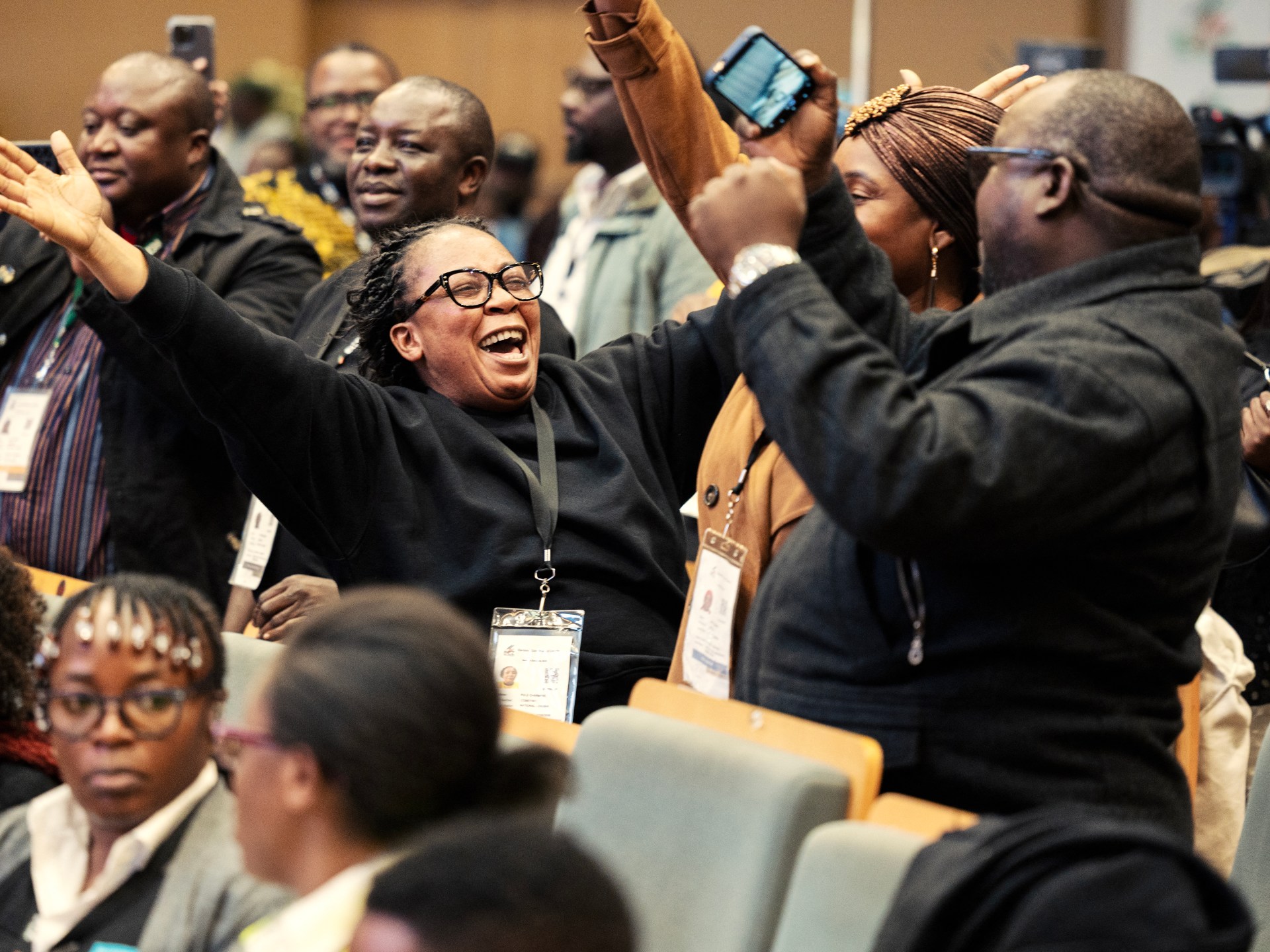

Lusaka, Zambia – Hakainde Hichilema has been re-elected as Zambia’s president after defeating opposition challenger Brian Mundubile by more than one million votes, but his victory comes amid opposition concerns over the conduct of the election and questions about the country’s political direction.
The Electoral Commission of Zambia (ECZ) declared Hichilema the winner on Tuesday after he secured 2,965,326 votes against Mundubile’s 1,856,217, giving him another five-year mandate after first taking office in 2021.
The result of Thursday’s voting extends the rule of a leader who came to power promising to rebuild an economy weakened by debt, restore investor confidence and revive growth in Africa’s second-largest copper producer.
Mundubile’s alliance raised concerns over aspects of the voting process and the counting of results while Hichilema’s supporters rejected the claims and said the outcome reflected public confidence in the government’s direction.
The result begins a new phase in which Hichilema’s mandate will be tested against public expectations and questions about Zambia’s political landscape. His first term was largely focused on economic stabilisation and rebuilding international confidence. His second will be shaped by demands for stronger accountability, national unity and broader benefits from economic growth.
Copper remains central to Zambia’s future. As demand grows for the metal used in electric vehicles, renewable energy technologies and other parts of the global energy transition, the country is seeking to increase production and attract more investment.
Advertisement
But for many voters, the measure of success will not only be investment figures or economic indicators but whether political stability and resource wealth translate into better opportunities.
A victory with unfinished questions
Hichilema’s re-election completes a dramatic political turnaround for a politician who spent years in opposition before defeating former President Edgar Lungu in 2021.
His United Party for National Development (UPND) campaigned on promises of economic reform, improved governance and job creation. Mundubile’s opposition alliance focused on frustration over the cost of living and argued that improvements under Hichilema’s government had not yet reached many households.
![Supporters of Zambia’s President Hakainde Hichilema take to the streets of Lusaka to celebrate his re-election for a second term after defeating opposition challenger Brian Mundubile [Jean Mandela/Reuters]](https://www.aljazeera.com/wp-content/uploads/2026/08/2026-08-18T092025Z_301547258_RC2P0NAMPOVY_RTRMADP_3_ZAMBIA-ELECTION-BONDS-1787058282.jpg?w=770&resize=770%2C513&quality=80)
During the campaign, Mundubile alleged that opposition parties faced an uneven political environment, citing restrictions and concerns over the treatment of political competitors.
After the vote, his camp called for scrutiny of the electoral process. Hichilema’s supporters rejected the allegations.
The European Union Election Observation Mission said candidates were able to campaign through rallies and public meetings but raised concerns over campaign-related violence, political intimidation and the media environment.
The announcement of results was briefly interrupted after the Electoral Commission suspended the process following security concerns, including attacks on election officials and the theft of marked ballot papers, before the count resumed.
The promise of stability
Hichilema inherited an economy struggling under heavy debt and became president months after Zambia defaulted on its external debt obligations.
His supporters said his government has made progress through debt restructuring, improved relations with international lenders and renewed investor interest in mining.
Professor Lubinda Haabazoka, director of the Graduate School of Business at the University of Zambia, told Al Jazeera that the administration had made significant progress in restoring economic stability.
“In the past five years, President Hichilema managed to start working on the country’s macroeconomic fundamentals and made substantial progress in terms of debt restructuring,” Haabazoka said.
He said foreign reserves had increased, economic growth had recovered and investment into the mining sector had returned.
“Recently, we’ve seen the kwacha stabilise and these other fundamentals stabilise, so I think we are on a growth trajectory,” he added.
Advertisement
But critics argued that those gains have not yet translated into enough relief for households facing high living costs.
The next challenge for Hichilema will be moving from economic stabilisation to broader growth that creates opportunities beyond the mining industry.
The gap between recovery and reality
For many Zambians, economic recovery remains an unfinished promise.
The opposition made the cost of living a major campaign issue, arguing that improvements in economic indicators had not eased the pressures facing families.
![President Hakainde Hichilema casts his ballot at a polling station in Lusaka on August 13, 2026, during the country’s presidential election [Anita Reed/AP]](https://www.aljazeera.com/wp-content/uploads/2026/08/AP26225411013700-1787058305.jpg?w=770&resize=770%2C513&quality=80)
Elvis Mwape, a taxi driver in Lusaka, told Al Jazeera he welcomed Hichilema’s victory but wanted citizens to feel the benefits of growth.
“We thank God Hakainde Hichilema managed to win and secure his second term. We are looking forward to a win-win situation where, as the economy grows, we are also able to feed our families,” Mwape said.
His comments capture the challenge facing the president: maintaining investor confidence while responding to citizens who judge the economy through the price of food, transport and daily expenses.
Hichilema enters his second term with the authority of victory but also with greater pressure to deliver.
The government will face demands to create jobs, expand economic opportunities, address energy challenges and ensure that Zambia’s mineral wealth benefits more people.
For investors, continuity under Hichilema offers stability. For many citizens, the measure of success will be whether that stability changes their lives.
Vincent Mwale, an independent member of parliament for the newly created Chipangali West constituency, told Al Jazeera that the election result carried a message for the government.
“The UPND has maintained power, and we have done it peacefully. Now, I think they need to get down to work. This election should have given them a message of where the issues were,” Mwale said.
“We want them to put effort into uniting the nation. The results suggest there is a divide somehow, and I am sure they are able to see the voting pattern. But I have every confidence that President Hichilema can rise to the occasion and bring everybody together.”
Related News
Will India’s ‘Cockroach’ movement force Modi’s BJP to rethink its politics?
UAE accuses Iran of attacks on two ADNOC vessels in Strait of Hormuz

Putin and Zelenskyy issue threats as strikes rock Ukraine, Russia