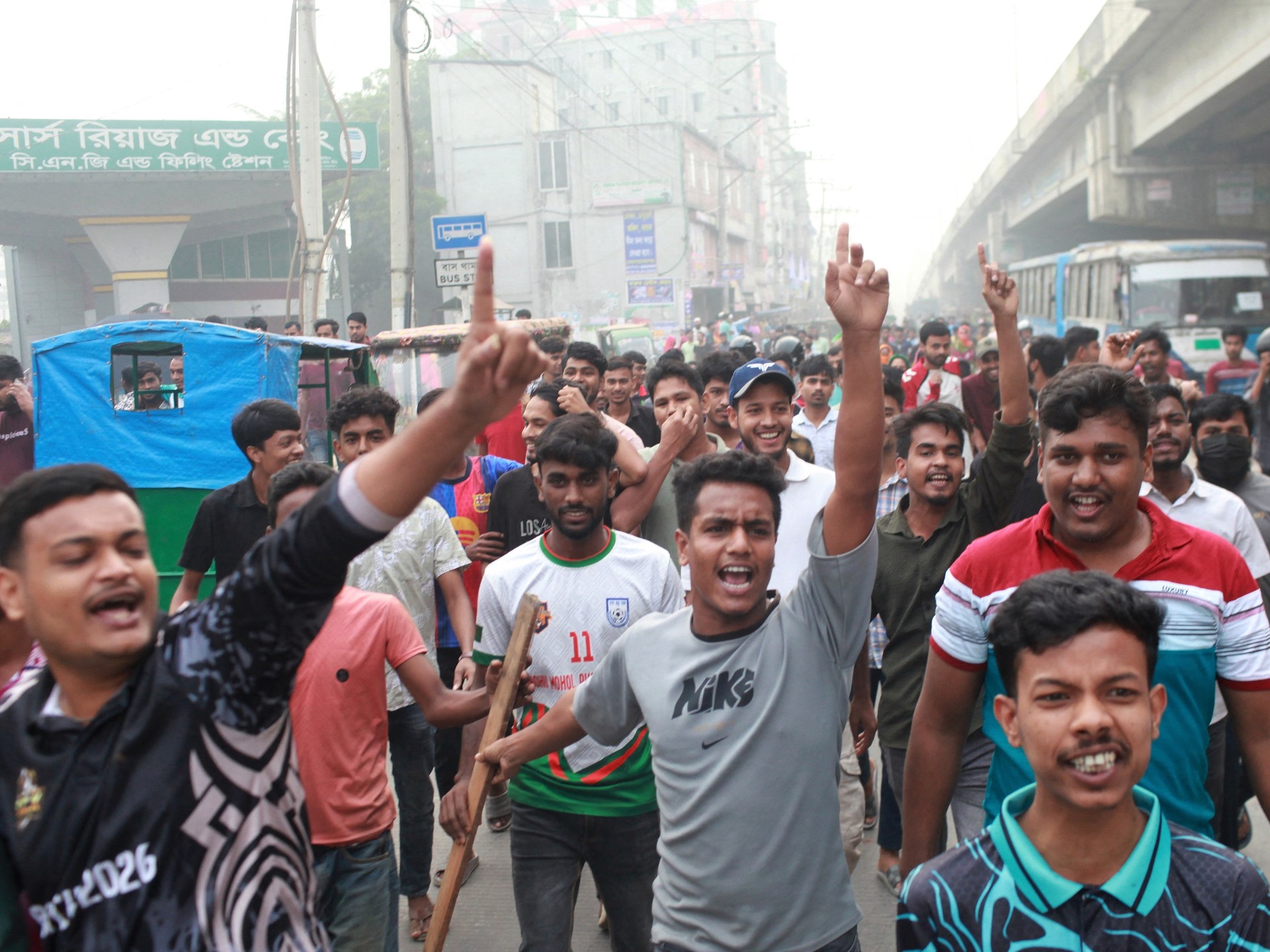

Bangladesh’s garment industry brings in about $38bn a year. The minimum wage is around 12,500 taka ($100) per month.
Representatives of Bangladeshi garment workers have rejected a pay offer from employers.
Factory owners submitted a pay proposal at a meeting convened by the government-appointed wage board on Monday, but worker representatives dismissed it as too low.
- list 1 of 4Gaza mourns UNRWA worker killed in Israeli strike
- list 2 of 4Israeli strikes kill at least three, including UNRWA worker, in Gaza
- list 3 of 4Why did COP31 climate talks collapse without a deal?
- list 4 of 4Tajikistan moves to leave ICC amid US push against court
end of list
The failure to reach an agreement during the wage talks suggests that the weeks of strikes and protests over the minimum wage in the industry could persist.
Babul Akhter, who represents workers on the wage board, told reporters after the meeting that “the offer … falls far short of what we have been demanding”, according to the AFP news agency.
The board kept the figure that had been offered confidential, although Chairman Judge Syed Azad Subhani said the proposed monthly minimum wage was above 14,500 taka ($116).
Workers’ representatives had formally proposed 32,000 taka ($258) for the lowest regular pay grade and 30,000 taka ($241) for apprentices.
Bangladesh’s garment industry brings in about $38bn a year, employs around four million people, and accounts for roughly four-fifths of the country’s export earnings.
However, the world’s second-largest garment exporter after China has seen widespread protests since October. Strikes have disrupted production at factories across the country, closing around 500 of its more than 4,000 clothing factories.
Workers say that wages have failed to keep up with the rising cost of food, housing, transport and healthcare.
The Bangladesh Garment Manufacturers and Exporters Association estimated that 317 factories lost $428m in production between November 1 and 18.
Advertisement
During the last wage review in 2023, labour groups rallied for a monthly minimum of at least 23,000 taka ($185). The government set it at 12,500 taka ($100), a figure unions rejected at the time but ultimately accepted.
They are now pushing for an increase of around 140 percent, but their anger has risen due to the closure of around 500 plants by employers.
A “no work, no pay” provision in the country’s labour laws allows factory owners to suspend operations and withhold wages when production is disrupted.
Related News
Indonesian president apologises to Singapore, Malaysia for wildfire haze
What is Hasina’s game plan as she seeks a passport to return to Bangladesh?
Sudan’s war leaves disabled children missing out on education