Poll finds Americans less likely to back pro-war candidates by 3-1 margin
 09 November 2026
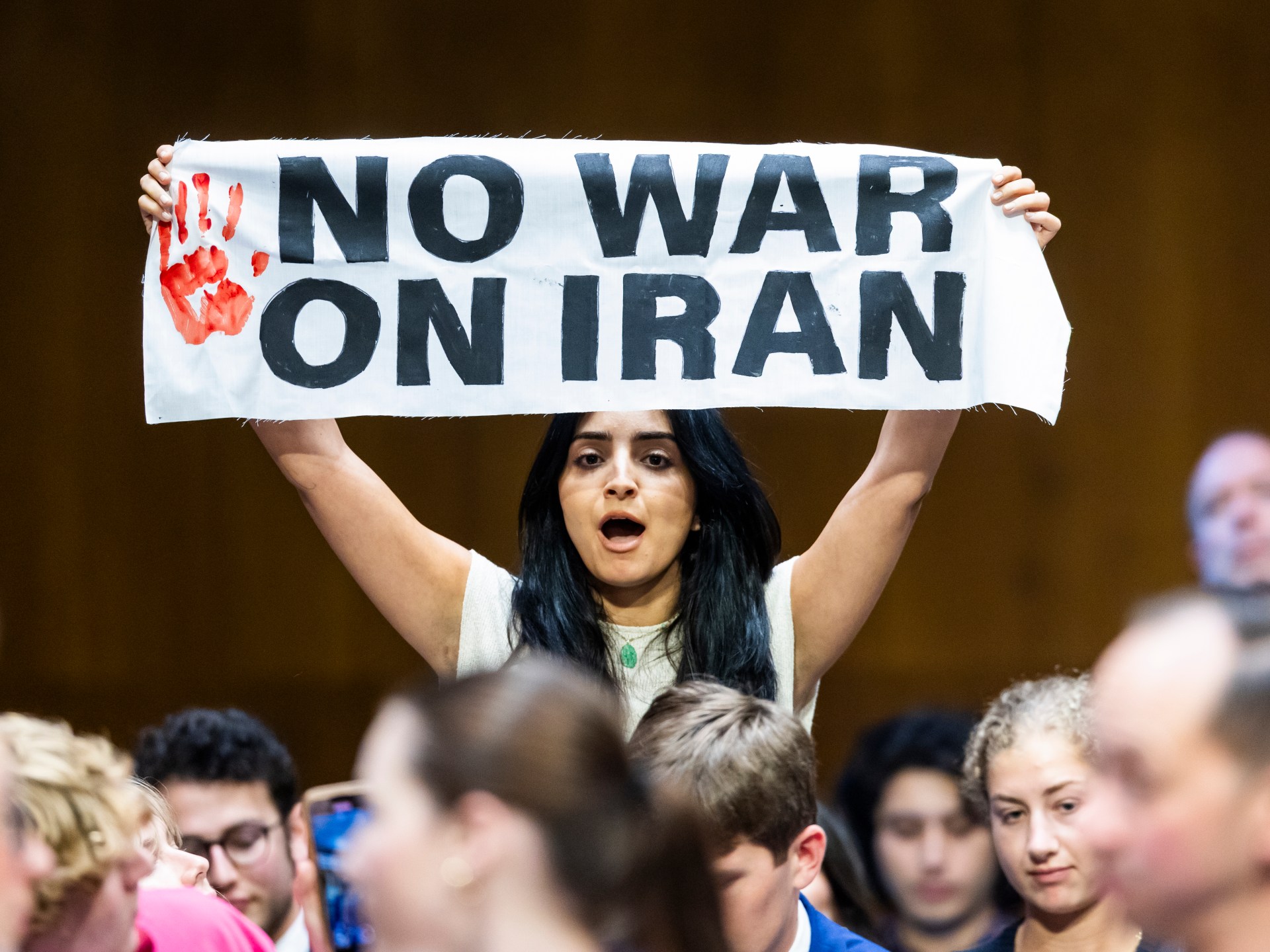

A YouGov poll completed on the eve of the 2026 midterm elections has found that Americans were far less likely to back candidates who supported the US-Israel war on Iran.
The poll, released on Monday, found that 44 percent of people said they were less likely to support candidates who backed the war, while just 13 percent said they were more likely.
- list 1 of 3Congress defeat: How Trump’s allies are distancing themselves from Iran war
- list 2 of 3Division among US Democrats over Schumer’s leadership role
- list 3 of 3Jeffries backs Hegseth impeachment as Democrats vow probes of Trump allies
end of list
That means a candidate’s support for the war was more than 3 times as likely to put people off as to win them over.
Another 26 percent, meanwhile, indicated the Iran war would not make much of a difference in their vote.
The economics of the war also factored into people’s choices. Some 56 percent of those surveyed said that the US should prioritise avoiding higher prices domestically over achieving US President Donald Trump’s military goals in Iran.
Meanwhile, 22 percent said the opposite: that the Trump administration should prioritise the war over higher costs.
The poll also asked who should decide when the war ends. A majority, 53 percent, said Congress should have the final say, while 29 percent said that the president should decide.
The US and Israel jointly launched the war against Iran on February 28. But Trump’s decision to bypass congressional authorisation for the war has raised constitutional concerns in the US.
Jonathan Guyer, the programme director at the Institute for Global Affairs at Eurasia Group, a risk consultancy firm, told Al Jazeera that the poll – which was conducted on his organisation’s behalf – indicated Americans were looking to Congress to be more assertive.
Advertisement
“The story of the [economic] tradeoff is really important, and then there’s this other story of where Congress has been: Why haven’t lawmakers, not just over the last year but over the last decade, played a bigger role as a backstop on reckless wars launched by presidents?” said Guyer.
“And I think these numbers show the public really wants Congress to play a bigger role and expects their lawmakers to hold power to account.”
The survey is the latest to underscore the unpopularity of the US-Israel war on Iran, which has killed thousands of people in Iran and contributed to surging prices, a top issue in the November 3 midterm elections.
Trump’s Republican Party suffered one of the most significant electoral setbacks in modern US history, with Democrats reclaiming both chambers of Congress with strong majorities.
Democrats also flipped key offices in states like Texas, once seen as a conservative stronghold.
Those results have advanced a debate over the war that is playing out in both parties, often pitting more hawkish establishment figures against newcomers opposed to foreign intervention and support for Israel.
In the wake of the “blue wave”, analysts have argued that Democratic voters may expect the party’s leadership to take firmer steps to rein in the president and bring the fighting with Iran to an end.
On Monday, Trump himself said “Iran militarily is effectively over”, though he declined to rule out any further military action. A US naval and land blockade around Iran also remains in effect.
Guyer said he anticipates that foreign policy and, in particular, US support for Israel is likely to emerge as a key dividing line for candidates in future elections, particularly the upcoming 2028 presidential election.
“I think it does create a lane for people like Senator-elect Abdul El-Sayed, for the wing of the [Democratic] party represented by Mayor Zohran Mamdani, who have a very strong position on this war and on the role of the US in the world that traditional Democrats have been largely silent on,” said Guyer.
A similar debate is also taking place on the political right.
Following the midterms, US Vice President JD Vance shared a lengthy social media post blaming his party’s implosion on the war.
Figures such as Tucker Carlson and Marjorie Taylor Greene have also criticised the war as a betrayal of Trump’s promise to end conflicts around the world.
While the YouGov poll found that Republicans were the only group more likely to vote for a candidate if they supported the president’s war, Guyer says that support has been “softening”.
Advertisement
“A third of Republicans say that backing the war made a candidate appealing, so it’s kind of small,” he said. “And 40 percent shrugged and say it made no difference.”
Related News
Israeli forces kill at least five people in Gaza, including 7-year-old girl
Syrian families demand release of detainees held by Israel
New Zealanders head to polls on final day of voting