Mexico seeks evidence of border shooting that prompted US troop deployment
 05 October 2026
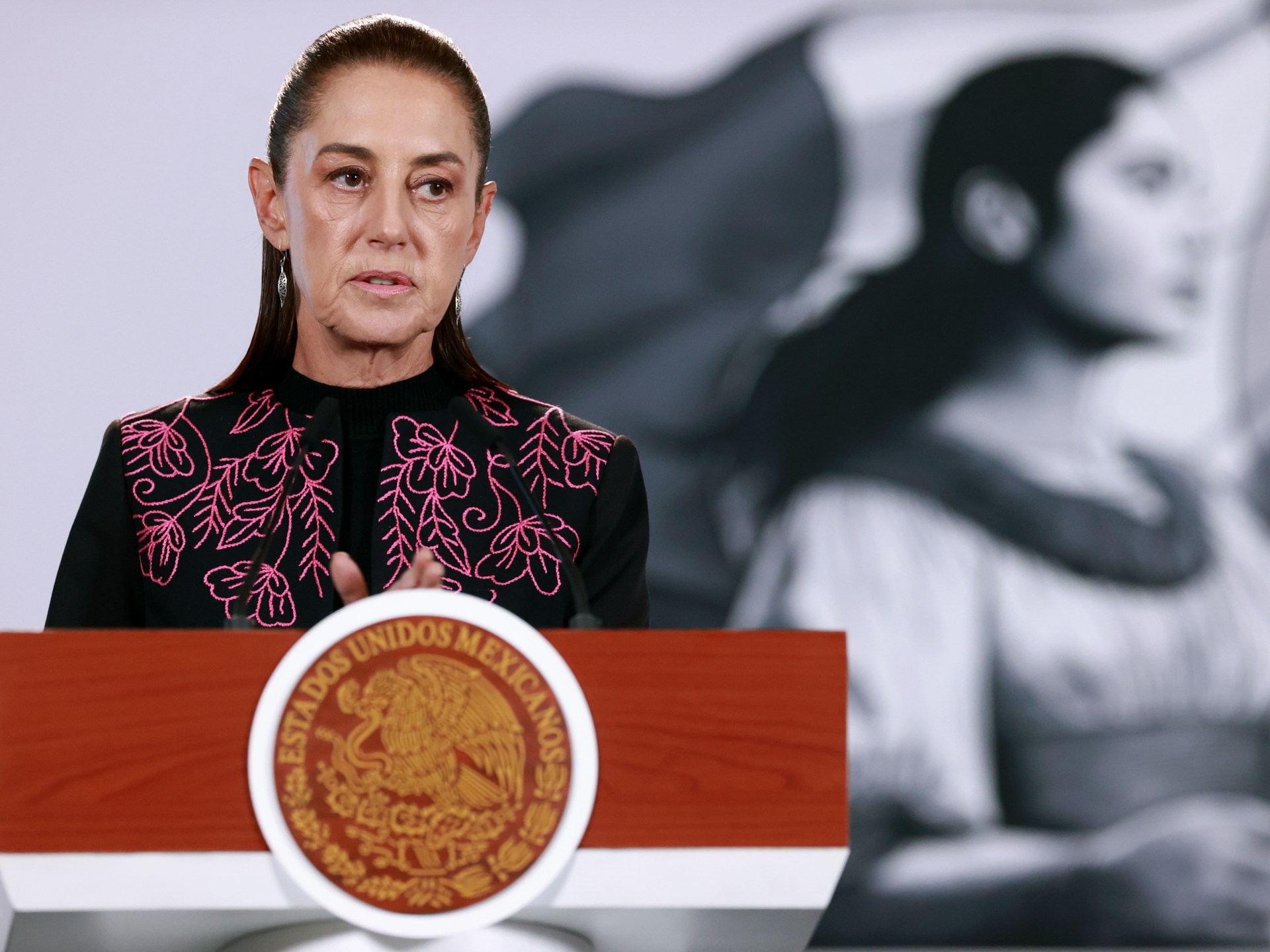

Mexico has asked the United States for evidence of a cross-border shooting that allegedly targeted US security personnel.
In her daily news conference on Monday, Mexican President Claudia Sheinbaum explained that the US had reported “shots from the Mexican border”.
- list 1 of 3Marco Rubio says US seeks more economic and security ties in Latin America
- list 2 of 3Trump rallies Latin American allies against drug cartels
- list 3 of 3Latest US military strike on alleged drug boat kills four in Caribbean
end of list
“We asked for all the evidence because we have no evidence,” Sheinbaum said. She added that Mexico’s National Guard, Army and Navy had not detected any shots being fired from Mexican territory towards the US.
Sheinbaum made her remarks a day after the US Ambassador to Mexico Ronald Johnson wrote on the social media platform X about the shooting, which allegedly took place in Texas across from the Mexican state of Tamaulipas in late September.
Johnson said the targets were members of the US Coast Guard, and that the threat would be “swiftly addressed”.
“The U.S. Embassy in Mexico is helping coordinate with Mexican forces deploying to the border area where U.S. Coast Guardsmen were fired upon,” Johnson wrote.
“Together, we intend to patrol both sides of our shared border, protect our communities, and make it more difficult for criminal and terrorist organizations to operate.”
Some 500 US troops, along with helicopters, drones and anti-drone equipment, have been sent to the border since the alleged shooting.
Mexico has sent its own deployment in the border area, as part of a joint operation called Operation Mirror between the two countries to secure the frontier.
In Monday’s news conference, Sheinbaum confirmed that the Mexican deployment was designed “to forestall any issues” that may arise.
Advertisement
During their time working together, Johnson and Sheinbaum have repeatedly been at odds over questions of border security and national sovereignty.
A former US Army Green Beret who later served in the Central Intelligence Agency (CIA), Johnson has served as ambassador to Mexico since May 2025, under US President Donald Trump.
Since returning to office for a second term, Trump has sought to increase US influence over Latin America, as part of a policy informally dubbed the Donroe Doctrine — a twist on the 19th-century Monroe Doctrine.
His administration has also taken a more active role in the region’s security, on the premise of combatting narcotics trafficking and criminal organisations.
Trump has repeatedly said he may carry out military strikes inside Mexico to attack the cartels he said are “running Mexico”, framing their presence as a threat to US security. Sheinbaum, however, has warned that such an operation would violate her country’s sovereignty.
Mexico’s tensions with the Trump administration have strained relations with Johnson. Sheinbaum has accused the ambassador of overstepping diplomatic norms, while Johnson has sought to push the Mexican government to cooperate with Trump’s demands.
In June, Johnson criticised Sheinbaum’s government on social media for turning the “fight against cartels” into a “political dispute”.
Sheinbaum responded the next day with a warning for Johnson, saying, “Ambassadors must respect the internal political affairs of their countries.”
Law enforcement agencies in the US and Mexico have long cooperated in counter-narcotics operations, but Trump’s militaristic approach has created friction with left-wing governments including Mexico.
On Monday, Sheinbaum took issue with Johnson for announcing the opening of an international police academy in the central state of Queretaro without her government’s knowledge.
“How can a groundbreaking ceremony take place with a US ambassador and a Mexican governor, but not with the federal security cabinet?” she said.
Under the Mexican constitution, the federal government must approve the activities of foreign forces on Mexican soil.
But that law was tested earlier this year, when two CIA agents were reportedly killed in an April car accident in the northern Mexican state of Chihuahua, alongside members of the state’s law enforcement.
What the CIA agents were doing in Chihuahua remains unclear. Reports emerged that the CIA agents may have been participating in a state-led raid on a local drug lab without federal authorisation.
Advertisement
One state official publicly denied that report, saying the agents were conducting an unrelated training on drone usage.
Sheinbaum said neither she nor her cabinet were informed of any CIA activities, and her government pledged to investigate the incident.
Related News
Yemen government forces widen attacks against Houthis: What we know
India warns new US tariffs over Russian oil could impact ties
Flydubai flight to Israel diverted after attack on pilot