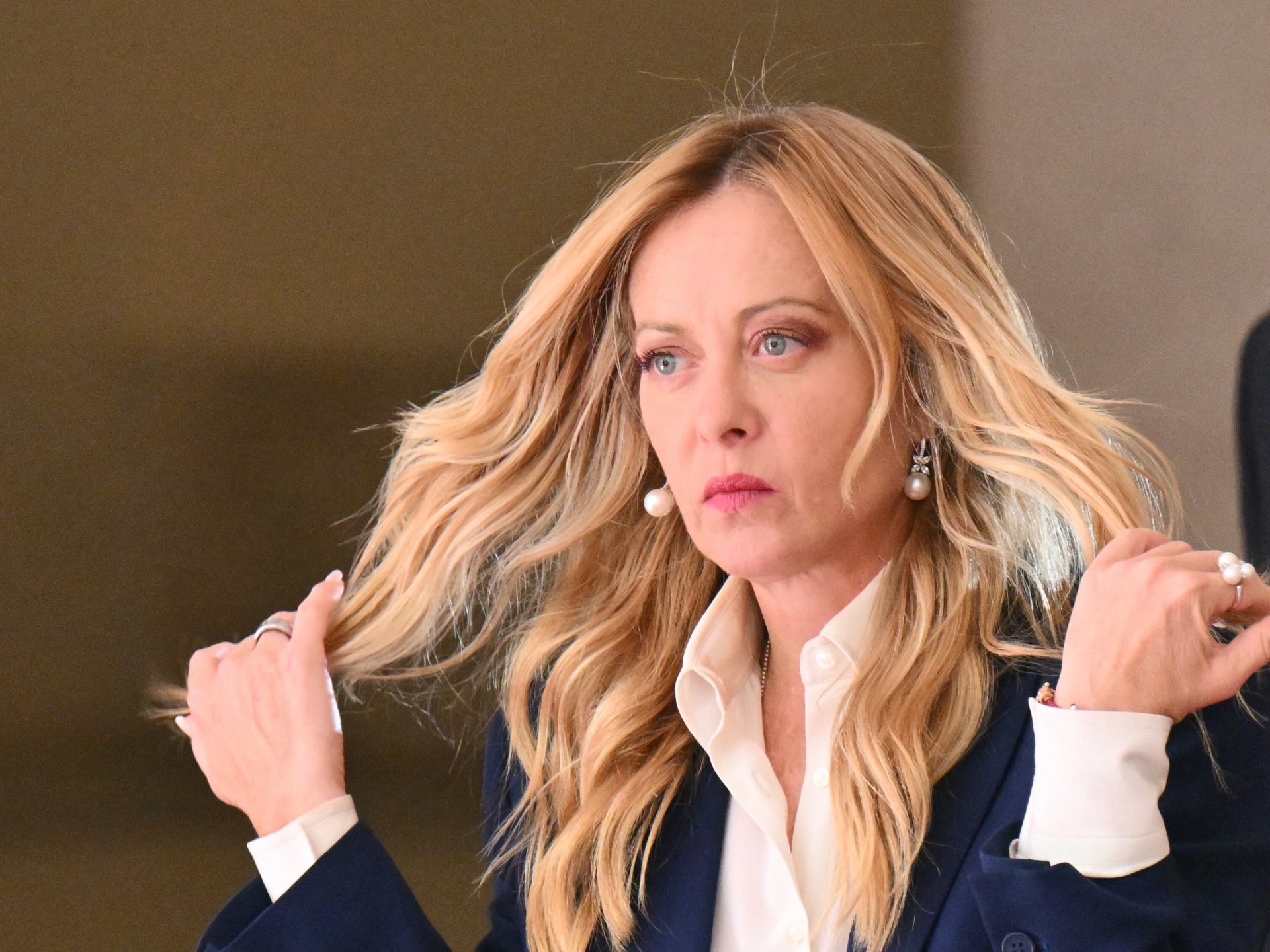

Italy will ban burqas and niqabs in schools, as well as limit the number of foreign students in classes, said far-right Prime Minister Giorgia Meloni, with immigration expected to be a central issue in next year’s general election.
Meloni outlined the proposed changes on Sunday at a gathering of the youth wing of her nationalist conservative Brothers of Italy (FdI) party, adding that they would also make Italian language lessons compulsory for parents of foreign students having “serious difficulties integrating into the school system”.
- list 1 of 3Meloni sets a record, leading Italy’s longest-serving government since WWII
- list 2 of 3Europe’s far right: Putin’s best friend?
- list 3 of 3‘Anti-Zionism is not anti-Semitism’: Protesters warn against Italian bill
end of list
“For us, anyone who comes to Italy and wants to build their future here must learn our language, understand our culture, and respect our rules,” she said to a standing ovation at the Gioventu Nazionale national festival in Rome. “It is the only serious way to welcome them.”
Once approved by the government, the changes would need parliamentary approval within 60 days to pass into law.
Meloni’s right-wing administration is Italy’s longest-running government since the end of the Second World War, but her party is expected to face a serious challenge in 2027 from the National Future (FN) party, which is further to the right of the FdI and its popularity has been rapidly increasing in polls since February.
FN called for a crackdown on the wearing of burqas in schools in July.
Burqas are full-face veils sometimes worn by Muslim women that hide the entire face, including the eyes. Niqabs are similar, but the eyes are visible.
Neither covering is expressly banned in Italy, but a 1975 law prohibits the use of helmets or garments that make identification difficult without a justified reason.
Advertisement
A 2008 ruling later clarified that full-face coverings may be worn for religious or cultural reasons if the face is revealed when identity verification is required.
However, the anti-immigrant League party, which is part of Meloni’s ruling coalition, submitted a bill earlier this year that would ban helmets or garments, except in specific circumstances such as sporting events or places of worship.
Alongside the burqa ban, Meloni said she would implement a legal cap on the number of foreign students per class.
However, a 30 percent limit on foreign students per class and school already exists under Italian law and Meloni did not spell out how that would change.
Foreign students currently make up about 12 percent of enrolment in Italian schools.
Related News
Could 4+4 make 1 in Libya? UN-backed agreement looks to unite rival camps
Thousands protest in Spain as Ceuta’s migration crisis festers a month on
Russia strikes Kyiv as three-day pause during US envoy visits ends