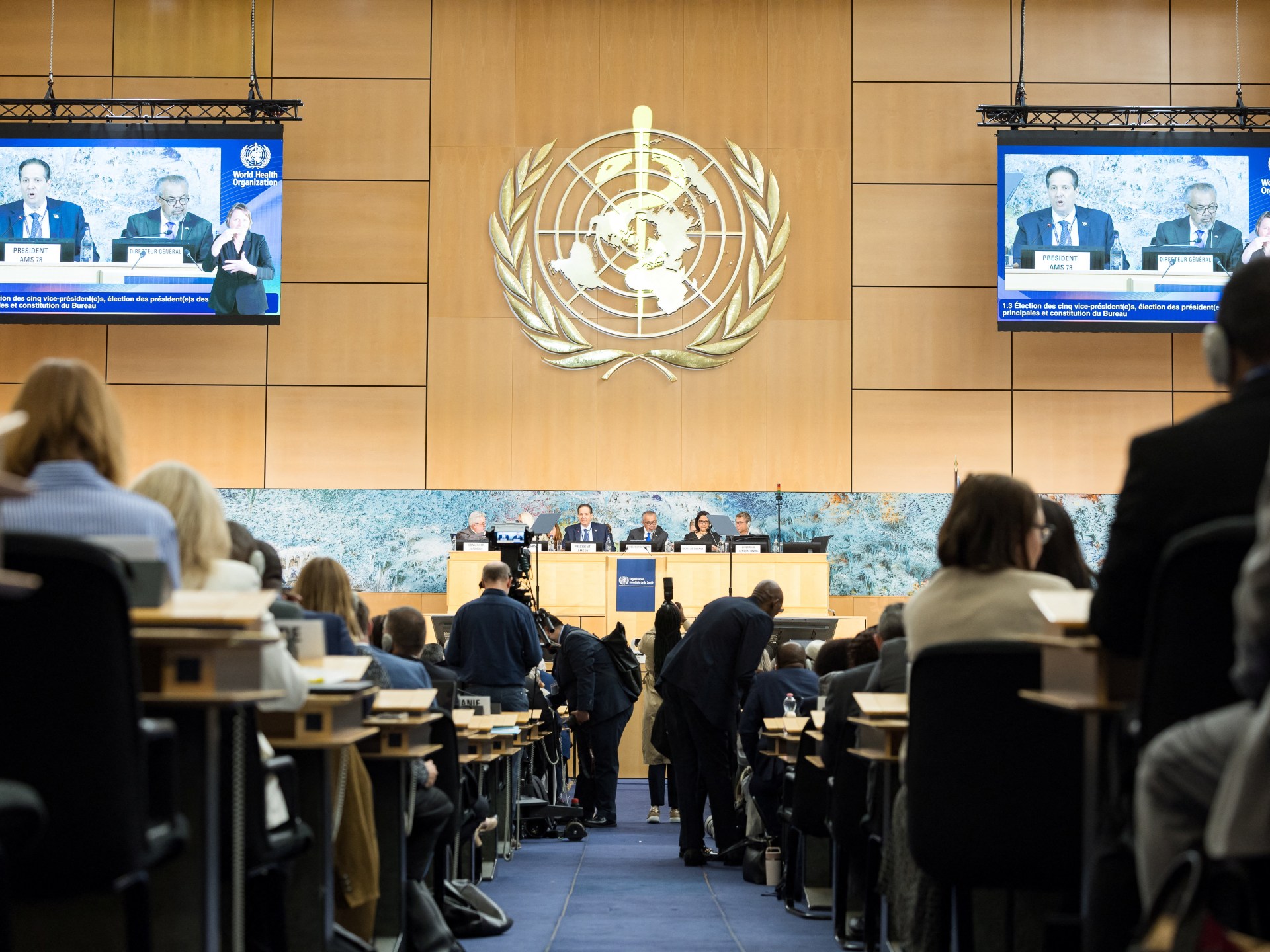

The World Health Organization (WHO) is convening in Geneva, Switzerland this week for the 79th World Health Assembly, where mental health is among the more than 75 agenda items that will be discussed.
More than one billion people – roughly one in eight people globally – are currently living with a mental health condition, according to the WHO. And that number is rising.
Of those affected, young people are among the hardest hit, while men face higher rates of suicide and women are experiencing disproportionately higher rates of anxiety and depression.
Despite the scale of the crisis, mental health is chronically underfunded – median government spending globally on mental health is just two percent of health budgets, according to the WHO.
What are mental health disorders?
Mental health disorders are conditions that affect how people feel, think and behave.
The WHO and the Diagnostic and Statistical Manual of Mental Disorders (DSM-5) categorise mental health conditions into several groups.
Mood disorders, such as depression and bipolar disorders, affect a person’s mental state, often leading to prolonged periods of sadness or mood swings.
Anxiety disorders include generalised anxiety disorder (GAD), panic disorder, social anxiety and phobias, which are characterised by fear or worry.
Psychotic disorders, such as schizophrenia, involve delusions, distorted thinking and hallucinations.
Trauma-related disorders, which include post-traumatic stress disorder (PTSD), develop in response to distressing or life-threatening events.
Advertisement
There are also other mental health conditions such as eating disorders, personality disorders, obsessive compulsive disorders, dissociative disorders and substance use disorders.
Explore the table below to find out more about conditions.
Mental health prevalence globally
Mental health disorders are widespread and on the rise globally.
According to the WHO, one in eight people lives with a mental health condition, with anxiety and depressive disorders being the most common types.
Mental health disorders tend to affect people across income groups. However, treatment in low- and middle-income countries is scarcer.
Spending on mental health ranges from $0.04 per capita in low-income countries to $0.34 per capita in lower-middle income countries and $65.89 in high-income countries, according to the WHO Mental Health Atlas 2024, which collected data from 75 countries.
The prevalence of mental health disorders across WHO regions in 2019 was:
- Americas: 15.6 percent of the population
- Eastern Mediterranean: 14.7 percent
- Europe: 14.2 percent
- Southeast Asia: 13.2 percent
- Western Pacific: 11.7 percent
- Africa: 10.9 percent
During the COVID-19 pandemic, the incidence of mental health disorders rose globally, with anxiety and depression surging in particular. According to the latest Global Burden of Disease report from the Institute for Health Metrics and Evaluation (IHME), the most common mental health disorders globally include:
- Depressive disorders affecting 694.6 people per 100,000
- Anxiety disorders affecting 686.5 per 100,000
- Schizophrenia affecting 210.2 per 100,000
- Bipolar disorder affecting 94.6 per 100,000
- Eating disorders affecting 47.5 per 100,000
Mental health disorders are the leading global contributors to disability, accounting for roughly one in every six years lived with disability (YLDs) worldwide – the second biggest cause of long-term disability, according to the WHO.
One death by suicide every 43 seconds
According to an analysis published in the medical journal The Lancet, about 740,000 suicides are reported annually – one death every 43 seconds, on average.
Suicide is the 17th leading cause of death across all age ranges, but it rises sharply among young people. It is the third leading cause of death among people aged 15 to 29 globally, and the second leading cause of death among 15-to-29-year-old women.
More men die by suicide than women. In 2021, the incidence of male suicides was four times higher than female suicides globally, with a suicide rate of 12.8 per 100,000 for males compared to 5.4 per 100,000 for females.
Advertisement
According to the WHO, vulnerable groups that face discrimination, such as refugees, Indigenous people and the LGBTQ+ community, see higher rates of suicide.
Anxiety is the most common mental health condition
An estimated 359 million people globally have an anxiety disorder. That number has increased by more than 50 percent since 1990.
Women are more likely to be affected by anxiety disorders than men, according to the WHO. Young people are also heavily affected, with 7.6 percent of 15- to 19-year-olds suffering from the disorder.
However, only one in four people with anxiety receives treatment, according to the WHO.
Anxiety disorders also increase the risk for developing depression or substance use disorders.
According to the WHO and IHME, Portugal has the highest rates of anxiety compared to other countries, with 13.3 percent of the population suffering from some kind of anxiety disorder. This is followed by Brazil (12.4 percent) and Iran (12.3 percent).
The map below shows the percentage of people in each country with anxiety.
Depressive disorders affect five percent of the world
An estimated 332 million people live with depression.
According to the WHO, depression is the single largest contributor to disability worldwide in terms of years living with a disability.
Women are more likely to develop a depressive disorder than men, with violence, trauma and hormonal factors contributing to the higher rates. Globally, more than 10 percent of pregnant women and women who have just given birth experience depression.
Research has shown that women tend to manifest mental health issues internally through depression, anxiety and eating disorders, while men tend to externalise their mental health through substance abuse and antisocial personality disorders.
According to the WHO and IHME, Syria has the highest rates of depressive disorders compared to other countries, with eight percent of the population suffering. This is followed by the United Kingdom (6.8 percent) and the Netherlands (6.2 percent).
If depression is left untreated, it can lead to suicide.
The map below shows the percentage of people in each country with depressive disorders.
Related News

Kuwait says it foils infiltration operation by Iran’s IRGC

Hamas must disarm, not ‘disappear’ from Gaza: Board of Peace’s Mladenov

Two killed as Israel ramps up southern Lebanon attacks ahead of US talks