
Beirut, Lebanon – Israeli attacks across Lebanon have killed at least seven people despite a United States-backed ceasefire extension.
The attacks on Monday came three days after Lebanese and Israeli officials held talks in Washington, DC, which resulted in an agreement to extend their ceasefire for another 45 days. Israel has repeatedly violated the truce, which was initially agreed in April.
- list 1 of 4Russian drone hits Chinese ship off Ukraine before Putin meets Xi Jinping
- list 2 of 4Iran says nuclear enrichment rights cannot be ‘negotiated’
- list 3 of 4Iran plans to offer insurance for Hormuz transit: Will it work?
- list 4 of 4DRC health minister visits hotspot for Ebola outbreak
end of list
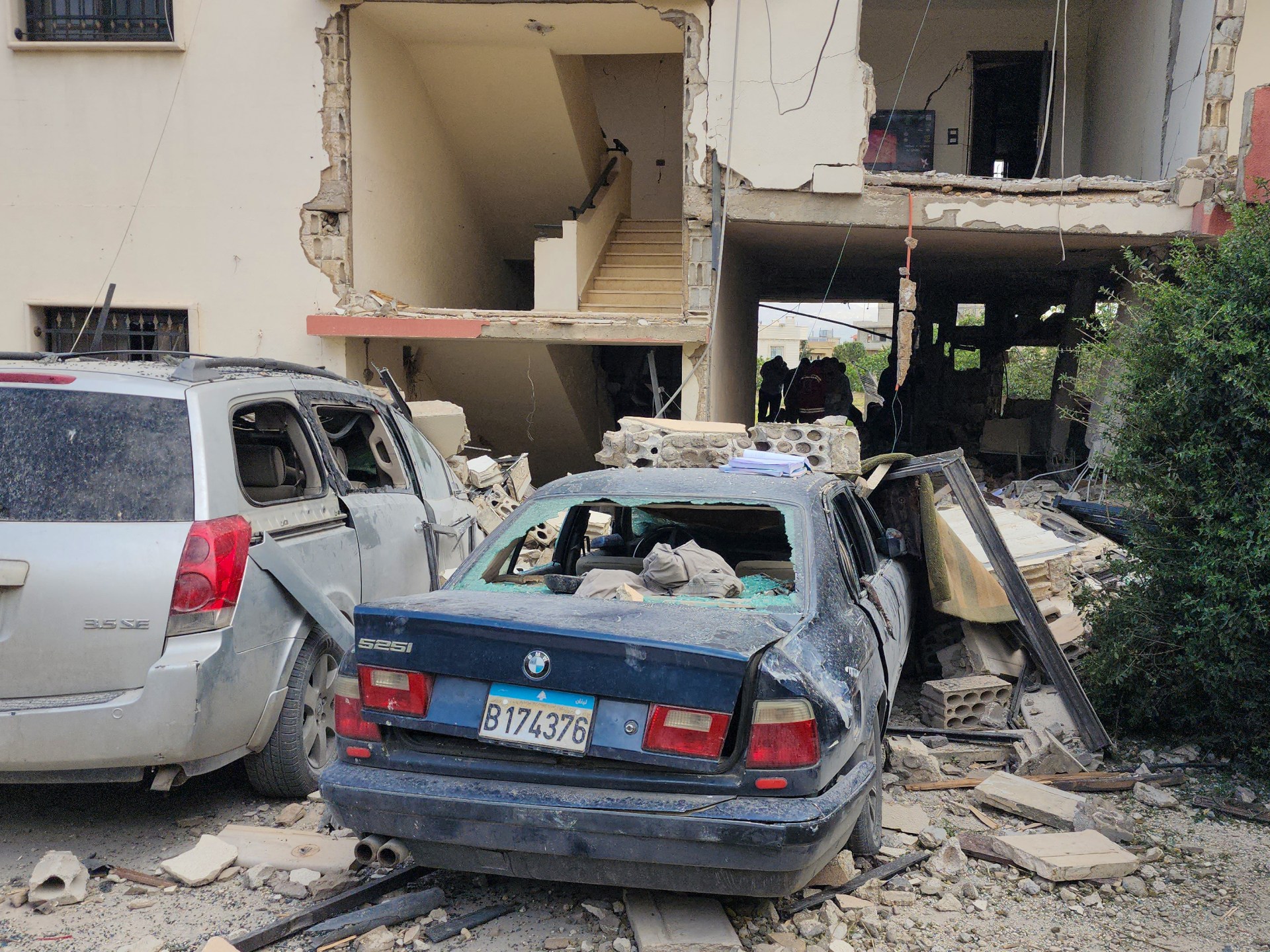
Those killed on Monday included Wael Abdel Halim, a leader in the Palestinian Islamic Jihad movement, and his 17-year-old daughter, Rama, who died when an Israeli air strike targeted an apartment building in the town of Douris in eastern Lebanon’s Baalbek district, according to the Lebanese Ministry of Public Health.
In the Jalil refugee camp for Palestinians on the outskirts of Baalbek, dozens of mourners marched through the camp after the attack.
Israeli strikes also continued across southern Lebanon with attacks reported in Hanaway, Dibal, Deir Ammar, Deir Amess and Meirka in the Tyre district, according to Al Jazeera Arabic’s correspondents on the ground. Additional strikes were reported in Harouf and other areas across the south.
Later on Monday, Lebanon’s Ministry of Health said the number of people killed since the start of Israeli attacks on the country on March 2 had reached at least 3,020, with 9,273 others wounded.
Continued hostilities
Last week’s negotiations to extend the ceasefire marked the third round of US-mediated talks, which kicked off with the first direct meeting between Lebanese and Israeli representatives in decades.
Advertisement
Under the agreement, a US-facilitated security track is expected to begin on May 29 with another round of talks scheduled for June 2 and 3 in Washington, DC.
However, the renewed diplomacy has done little to prevent Israeli hostilities that its military insisted are aimed at Hezbollah, which is publicly opposed to negotiations with Israel.
Israeli forces have persistently bombed southern Lebanon and continued to maintain positions in the area while the Lebanon-based armed group also remains actively engaged in the conflict.
Hezbollah said on Monday that it had targeted an Israeli bulldozer with a drone near Deir Siryan and struck an Israeli military communications drone in the same area. The armed group also said it fired missiles at a gathering of Israeli soldiers and military vehicles in Rashaf in southern Lebanon.
The hostilities continue to afflict Lebanon’s civilian population. On Monday, the Israeli military ordered residents of the southern Lebanese villages of Harouf, Borj El Chmali and Debaal to leave their homes before planned attacks.
Army instructions to civilians to move into open areas before the strikes have become increasingly common, essentially taking the form of forced displacement.
Israel said it struck more than 30 targets across southern Lebanon, claiming the sites belonged to Hezbollah. It added that the targets included weapons warehouses, observation posts and buildings used to coordinate attacks.
In a statement posted on social media, the Israeli military also said it had killed several Hezbollah fighters preparing “terror plots” against Israeli forces.
Forced displacement
Reporting from Tyre in southern Lebanon, Al Jazeera’s Obaida Hitto said the bombardment had intensified despite the ceasefire extension.
“It has been another violent day here in southern Lebanon,” Hitto said.
“Israel started out the day by issuing evacuation orders for four towns and villages in the south of the country. It subsequently conducted strikes on two of those locations.
“Strikes were also reported in Az-Zrariyah on a moving vehicle while another raid in Tayr Debba resulted in significant casualty numbers.”
Hitto said Israel had concentrated much of its firepower over the past two days on the western Bekaa Valley, the Marjayoun district and the Nabatieh district, targeting villages including Yohmor, Yohmor Shgeir, Zawtar el-Charqiyeh and Sohmor.
“There were also further strikes by Israeli jets and drones around the city of Bint Jbeil,” he said.
“All of this has resulted in a huge humanitarian crisis with more than a million people displaced. The situation is worsening as Israel has issued five more forced evacuation orders this evening, causing large numbers of people to flee areas that were previously not targeted or thought to be safe.
Advertisement
“And all of this as this ceasefire was extended. But we’ve seen the exact opposite. We are seeing more of an escalation by Israel in southern Lebanon.”
According to the Danish Refugee Council, more than 1.2 million people were forced from their homes between March and April because of the fighting.
Related News
UK counterterrorism police investigate arson attack at former synagogue
Atef Najib faces at least 10 charges in landmark Syria trial
Cuba says it has ‘legitimate’ right to defend itself amid US threats