
News Americas, NEW YORK, NY, Fri. Feb. 27, 2026: It was Saturday, January 24th, and my niece was hired for her first job. At seventeen years old, she stood on the edge of something new. Her first paycheck. Her first taste of independence. Her first official entry into the workforce. There is something sacred about that moment. It is a quiet declaration that childhood is slowly giving way to responsibility.
She asked me to help her fill out her I-9 and tax documents. Not because she could not do it herself, but because she wanted to make sure everything was right. That she would be compensated properly. That she would not make a mistake. I sat beside her, and together we moved through the paperwork line by line.
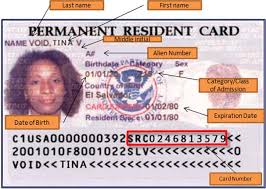
Then we reached a section that asked for either a passport number or an A number.
She paused.
“What’s an A number?” she asked.
I told her, “It means Alien Registration Number.”
She laughed lightly.
“Alien?” she said. “Like aliens?”
There was innocence in her question. The kind of innocence that only comes from not having to think about such things. For her, the word alien belonged to science fiction. To movies. To creatures with large heads and distant galaxies.
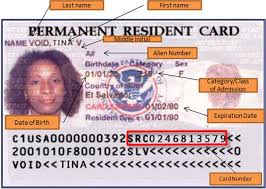
I explained to her that she does not have an Alien Registration Number because she was born here in the United States. But I do. Her mother does. Many of our loved ones do. We were born elsewhere. We came through the immigration system. And when we did, we were assigned a number.
That number begins with the letter A.
It struck me in that moment how casually the term is used. How normalized it is. How bureaucratic language has made something deeply human feel technical and sterile. But there is nothing sterile about the word alien. It carries weight. It carries history. It carries implications: Alien.
In its most common understanding, it means foreign. Not from here. Other. Sometimes even strange. Unfamiliar. Separate.
And yet that word is stamped across documents that define millions of lives.
The Alien Registration Number follows you from the moment you enter the immigration system. It appears on your green card. It appears on immigration notices. It is part of your permanent file. And even when you become a naturalized citizen, when you stand in a room full of strangers and raise your right hand and take the oath of allegiance, that number does not disappear.
You surrender your green card. You receive your naturalization certificate. You walk out as a citizen of the United States.
But your “A” number remains.
Often printed clearly on the very certificate that declares your new status.
There is something paradoxical about that. You are now fully American in the eyes of the law. You have pledged loyalty. You have been sworn in. You have become part of the nation’s civic fabric. And yet the document that confirms your belonging still carries the identifier that once marked you as an outsider.
A lifelong alien in America.
That phrase lingers in my mind.
What does it mean to be an alien for life, even after you become a citizen?
It means that your journey into this country is permanently recorded. It means that your identity contains a layer that those born here may never have to confront. It means that, in some quiet corner of a federal database, you will always be someone who arrived.
For some, that is not painful. It is simply administrative. A number. A file. A record.
But for others, it is deeply symbolic.
Because immigration is not merely paperwork. It is a sacrifice, it is departure. It is leaving behind language, food, culture, and familiarity. It is stepping into a place where your accent may be noticed before your intelligence. Where your name may be mispronounced before it is understood. Where your story is summarized into a category: Alien.
Today, immigration dominates headlines. Debates rage about borders, about enforcement, about who belongs and who does not. But rarely do we pause to reflect on the emotional weight of the system itself. On the quiet psychological reality of carrying a label that suggests foreignness long after you have pledged allegiance.
When I took my oath, it was one of the proudest days of my life. To stand there and affirm loyalty to the Constitution, to become a citizen of a country that had given me opportunity, education, and growth, meant something profound. It was not casual. It was not transactional. It was sacred.
And yet, printed on my naturalization certificate, in clear text, was my Alien Registration Number.
It did not invalidate my citizenship. But it reminded me that my path here was different.
There is humility in that reminder, gratitude too. Because I know what that number represents. I know the paperwork. The waiting. The uncertainty. The interviews. The fees. The documentation. The hope that everything will be approved.
And I know that somewhere, someone is still praying for that same opportunity.
For millions worldwide, an Alien Registration Number is not an insult. It is aspiration. It is evidence that they have entered the system. That they have a foothold. That they are visible to the law instead of invisible to it.
People risk their lives for that visibility.
They cross deserts. They board overcrowded boats. They leave behind family. They endure detention. They wait in limbo. All for the chance to one day receive documentation that begins with A.
So perhaps the weight of the letter depends on perspective.
To some, it sounds dehumanizing.
To others, it sounds like hope.
But what unsettles me is not the administrative necessity of a number. Governments require systems. Systems require identifiers. I understand that. I respect the structure.
What unsettles me is how easily language can shape perception.
When you call someone an alien, even in official terminology, you subtly reinforce the idea that they are not fully from here. That their belonging is conditional. That their identity contains an asterisk.
And over time, those subtle signals matter.
They influence how we see one another. They influence policy debates. They influence whether we approach immigration with empathy or suspicion.
My niece laughed when she heard the word alien. She had never thought about it before. Why would she? She was born here. She has a Social Security number. She checks the box labeled “citizen” without hesitation.
But that conversation gave me an opportunity to explain something deeper. To explain that many of us carry stories that begin elsewhere – that America is filled with people whose first documents here included that letter; that behind every A number is a journey.
And that we must not take that journey lightly.
There is also a quiet strength in being someone who came from somewhere else and built a life here. To adapt. To learn. To contribute. To serve in the military. To pay taxes. To raise children who will never have to think twice about their status.
Perhaps that is the hidden beauty of the lifelong alien. Not the label itself, but the resilience it represents.
Because once you become a citizen, you are no less American than anyone else. The Constitution does not rank citizens by birthplace. The oath does not contain an asterisk. The law recognizes you fully.
But emotionally, you may still carry awareness of where you began.
You remember the first time you held your green card.
You remember the anxiety before an interview.
You remember the relief of approval.
You remember the pride of naturalization.
And you remember that number.
It follows you not as a scar, but as a reminder.
A reminder that belonging can be earned.
A reminder that citizenship can be chosen.
A reminder that identity can expand.
When I think about the thousands and millions who are still dreaming of that opportunity, I feel gratitude. Gratitude that my family navigated the system properly. Gratitude that I was able to stand in that room and take that oath.
And I feel responsibility.
Responsibility to speak carefully about immigration. Responsibility to teach younger generations what these terms mean. Responsibility to humanize what bureaucracy can sometimes flatten.
Because at the end of the day, an Alien Registration Number is not a creature from outer space.
It is a record of arrival.
It is proof of process.
It is a marker of transition.
And for those who carry it for life, it is a testament to a journey that reshaped everything.
My niece will never have that number. She will move through forms and applications without pausing at the letter A. And that is a privilege I am grateful she has.
But I hope she always remembers the conversation we had; I hope she remembers that some of us began our American story with that letter. I hope she understands that immigration is not abstract. It is personal.
Because somewhere tonight, in another country, someone is filling out paperwork and praying for approval. Someone is hoping to receive that number. Someone is risking everything for the chance to one day hold a certificate that still carries the mark of where they started.
And if they succeed, they too will become lifelong aliens in America.
Citizens. Voters. Workers. Parents. Neighbors.
With a story that began with A.
Support NewsAmericas

Related News
Trump Confuses Bahamas And Bermuda At White House Black History Month Event

Here’s What Marco Rubio Offered CARICOM Leaders At St. Kitts Summit

Caribbean American Congresswoman Shirley Chisholm’s Legacy Lives On In Brooklyn’s Litt...