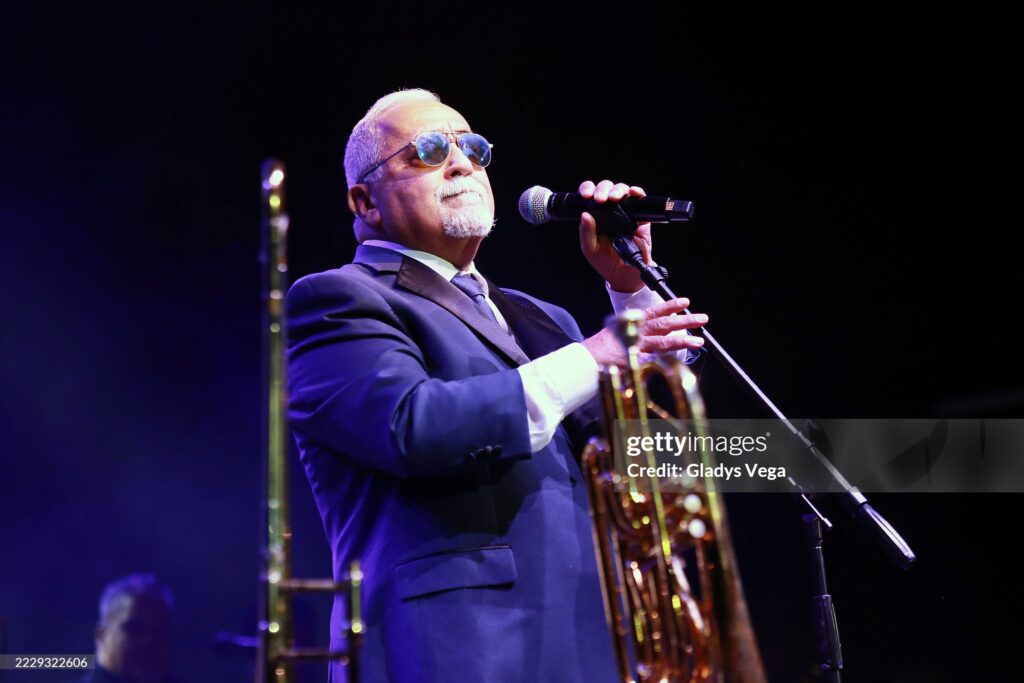

News Americas, NEW YORK, NY, Wed. Feb. 25, 2025: The American-born, Puerto Rico-roots artist Willie Colon, who helped design the sound and swagger of New York, the Caribbean, and Latinos around the world, has died from health complications at age 75. Colón didn’t just break boundaries for a genre that had yet to enter the U.S mainstream; he also championed Hispanic political and social causes.

His achievements extend far beyond best-selling albums and collaborations with Salsa legends. Colón’s music often carried political messages, but that was just the tip of the iceberg. He didn’t just sing about social issues; he actively engaged with his community, paving the way for many Puerto Ricans and Latinos.
So influential was his career that he even performed for U.S president Bill Clinton at his inauguration ceremonies in 1993. Over time, his interest in activism grew, leading him to take on leadership roles in various cultural and humanitarian organizations. His music addressed poverty, masculinity, immigration, life in the barrio, and other pressing social issues.
Colón’s journey began at 15, when he was signed to Fania Records, the record label that had other salsa legends like Celia Cruz and Rubén Blades. By 17, he had sold over 300,000 copies of his debut album. He started with a trumpet but later switched to the trombone, creating a sound that reflected the energy of New York. Drawing on styles from Cuba, Puerto Rico, Brazil and Africa, he transformed traditional Cuban music into something that resonated with his Bronx community.
His activism first gained national recognition when, in 1995, he became the first minority to serve on the board of the American Society of Composers, Authors and Publishers (ASCAP). This milestone opened doors for emerging Latin artists across the U.S, helping them step forward in a historically challenging industry. Colón also served with the Congressional Hispanic Caucus Institute, a nonprofit that creates opportunities for Latino students,
In 1989, his song “El Gran Varon” made a significant impact on the LGBTQ community by confronting the stigma surrounding HIV/AIDS. The song tells the story of Simon, who moves to the U.S, transitions, and eventually dies, presumably of AIDS, neglected by a father who did not accept him. Colón’s advocacy extended beyond music; he served with the Latino Commission on AIDS and the United Nations Immigration Foundation. He used his platform to support those affected by AIDS< as well as the homeless and vulnerable. He broke the silence in the Latin community around LGBTQ issues and the AIDS crisis.
For his contribution to music and activism, Colón received many awards and honors. In 2004, he earned the Lifetime Achievement Grammy Award from the Latin Academy of Recording Arts and Sciences. In 2015, Billboard Magazine named him one of the 30 most influential Latin artists of all time.
For more than 50 years, Colón has shaped Latin music and inspired generations of artists. His work transformed salsa into a genre that remains vibrant today, infused with Caribbean, African and Latin roots. He will be remembered not only for his groundbreaking music but also for his tireless activism, which paved the way for the Latin music we know today.
Specific funeral arrangements have not been publicly detailed as of press time.
Support NewsAmericas

Related News

Has Nicki Minaj Gone Full MAGA?

Oliver Samuels And CBS Star Zay Harding To Lead Explosive Easter Revival Of The Rope and T...

Trinidad-Born Rapper Nicki Minaj Signals Citizenship Move