
The United States has launched “powerful and deadly” strikes against groups it claims are affiliated with ISIL (ISIS) in Nigeria, President Donald Trump said on Thursday.
The unprecedented Christmas Day strikes came after weeks of accusations from Trump and top Republicans about an alleged “Christian genocide” they say has been enabled by the Nigerian government. They represent the first known direct US military intervention in the troubled, conflict-racked country.
- list 1 of 4Trump says US launched strike against ISIL in northwest Nigeria
- list 2 of 4US releases missile launch video after northwest Nigeria strike
- list 3 of 4Is there a ‘Christian genocide’ in Nigeria?
- list 4 of 4US air strikes in Nigeria “very much welcome” although late
end of list
Neither side has shared precise information about the identity of the targets struck and the results of the strikes. Security analyst Kabir Adamu from Beacon Security and Intelligence in Abuja told Al Jazeera the likely targets are members of “Lakurawa”, an armed group linked to an offshoot of ISIL, and which has only recently become known. Its profile is still being studied by researchers.
One town which appeared to have been hit was Jabo in the northwestern Sokoto State, but no ISIL-linked terror cells are known to operate there. Furthermore, when Trump and other US right wingers have referred to a “Christian genocide” In Nigeria, they have usually mentioned an entirely different area in central Nigeria.
Launching the strikes on Christmas Day and on locations in northwest Nigeria, where the Sokoto Caliphate, responsible for the spread of Islam into Nigeria and revered by Nigerian muslims, is highly symbolic, analyst Femi Owolade of the UK’s Sheffield Hallam University told Al Jazeera, and plays into the Trump administration’s narrative of “saving” Nigerian Christians.
Advertisement
“Striking on Christmas Day reinforces perceptions of a religiously motivated confrontation or a renewed religious ‘crusade’,” he said.
Here’s what we know about the strikes:
![[Al Jazeera]](https://www.aljazeera.com/wp-content/uploads/2025/12/WEB-MAP-NIGERIA-SOKOTO-1000X562-1766711326.jpg?w=770&resize=770%2C433&quality=80)
What happened?
US President Donald Trump revealed in a post on his Truth Social platform on Thursday that the US had launched “numerous perfect” strikes on “ISIS positions” in northwest Nigeria.
“Tonight, at my direction as Commander in Chief, the United States launched a powerful and deadly strike against ISIS Terrorist Scum in Northwest Nigeria, who have been targeting and viciously killing, primarily, innocent Christians, at levels not seen for many years, and even Centuries!…”
Trump did not disclose details about which or how many targets were hit, but he added that they would continue if the alleged slaughter of Christians did not stop.
The US Africa Command said in a statement that an initial assessment of the strikes had revealed “multiple ISIS terrorists were killed in the ISIS camps”.
US Secretary of Defense Pete Hegseth thanked Nigeria for cooperating with the strikes. The (US) “is always ready, so ISIS found out tonight – on Christmas. More to come…,” he posted on social media platform X.
In another post on X, the US Defense Department shared a video showing what appeared to be the moment a bomb was fired from a US warship in an unmarked location. Conflict analyst Murtala Abdullahi from Nigeria’s Office for Strategic Preparedness and Resilience in Abuja, who tracks aerial activity in Nigeria, said it was likely that the US had launched missiles from a position in the Gulf of Guinea.
In a statement on Friday morning, Nigeria’s Foreign Affairs Ministry confirmed the attacks and said they targeted elements based in the northwest of the country.
Nigerian authorities have vehemently denied allegations of a “Christian genocide”, and said the strikes had been carried out within an international cooperation framework that allows the sharing of intelligence and strategic coordination with the US and others, “consistent with international law, mutual respect for sovereignty and shared commitments to regional and global security”.
Speaking to Al Jazeera, Minister of Foreign Affairs Yusuf Tuggar said both parties closely cooperated on the attack and that the US Secretary of State had called him before the strikes were launched. Tuggar, however, added that Nigeria faces a complex security challenge that is also affecting other countries in the region, and that the strikes were not religion-based.
Advertisement
“It is a regional conflict, it is not a Nigeria Christian-Muslim conflict,” he said.
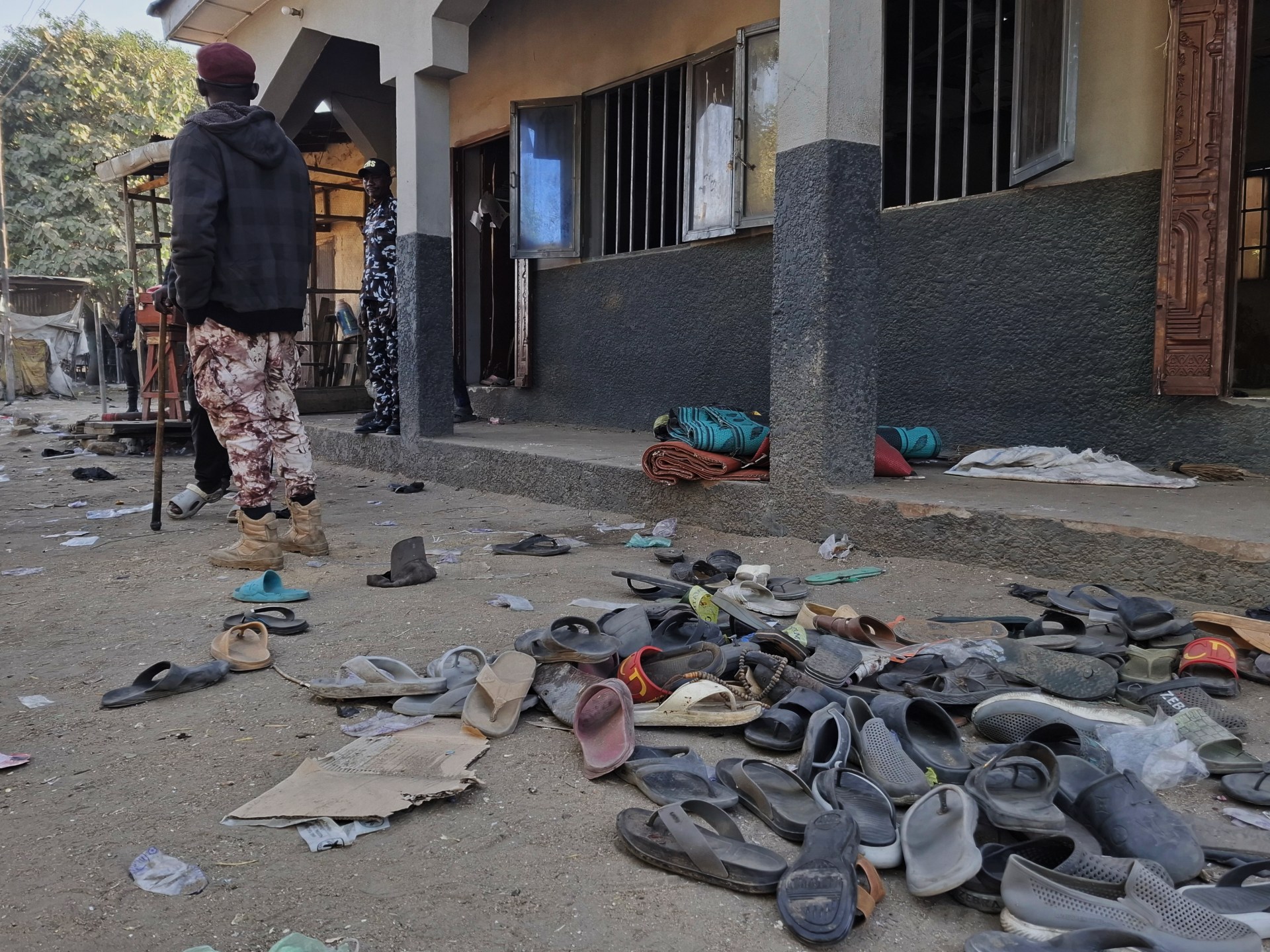
At least one town – Jabo in Nigeria’s northwestern Sokoto State – was confirmed to have been hit, analyst Adamu said. Photos shared on social media by residents there appear to confirm the location, with some posting what appear to be fragments of a bomb and others posting videos of a large fire on a farm. The information could not be independently verified by Al Jazeera.
“There were no casualties as of this morning,” Adamu said, adding that it’s unclear why Jabo was chosen, as there are no known ISIL-linked terror cells there.
Locals on social media also questioned why their town had been targeted.
A spokesperson for the Nigerian Foreign Ministry told Al Jazeera that the strikes had been carried out based on intelligence provided by Nigeria.
“The air strikes covered a precise area, and what people are seeing are fragments that fell in Jabo,” he said.
Is ISIL operating in Nigeria?
Yes, about six ideological armed groups exist in Nigeria, all of them linked to either ISIL (ISIS) or al-Qaeda.
They have targeted both Christian and Muslim communities in their areas of operation in the country’s predominantly Muslim northeast and northwest regions.
The strikes on Thursday likely targeted a faction called Lakurawa, which has recently emerged, and whose profile is still not fully known.
Here are some of the factions explained:
Boko Haram: The most recognised armed group is Boko Haram, which is based in Borno State, northeast Nigeria.
The group gained international notoriety for kidnapping 300 school girls from their dormitory in Chibok, Borno State, under the leadership of Ibrahim Shekau in 2014.
It was most active between 2012 and 2015. At the height of its activities, the group targeted military installations and civilians around Borno and the neighbouring Yobe and Adamawa states. It also spread across porous borders into Cameroon, Niger and Chad.
Boko Haram used suicide bombing and mass kidnapping tactics against both Christian and Muslim communities, attacking churches and mosques alike. Its main hideout was the Sambisa Forest in Borno, but it also controlled large swaths of rural territory where it taxed locals and operated as a government.
At least 30,000 people died, and millions were displaced at the height of Boko Haram’s operations. The group has been largely deflated by infighting and pressure from the Nigerian military. Since 2015, it has lost much of the territory it controlled.
ISWAP: The ISIL-affiliate in West Africa Province (ISWAP) broke away from Boko Haram in 2016 following disagreements between top military leaders. The two groups have maintained a violent rivalry.
ISWAP is believed to have between 8,000 and 12,000 fighters, according to the United Nations. It is currently active around the Lake Chad basin area in northeast Nigeria, and has active cells in the northwest of the country.
It controls local communities, where it attempts to win support by providing basic amenities while taxing local farmers and fishermen.
Advertisement
Lakurawa: A newly emerged faction, the group operates in remote parts of the country’s northwest Sokoto State, including in the Tangaza, Gudu, Illela, Binji and Silame local governments. It is also present in northwest Zamfara and Kebbi states.
Jabo, which is located in Sokoto and was struck on Thursday, is known for harbouring bandits, but analysts say there’s no strong presence of Lakurawa or other ISIL cells in the town.
Nigerian officials confirmed the group’s existence in November 2024 and designated it a terror group in January.
Before its emergence, ragtag bandit groups had been targeting remote communities in Sokoto and neighbouring Zamfara. In 2017, local leaders invited armed fighters from Mali and Niger, mostly from the Fulani pastoral ethnic group, to fight the bandits, as government presence was failing to deter them, according to researchers James Barnett and Vincent Foucher. However, some of the arriving fighters were affiliated with armed groups operating in Niger and Mali, including the ISIL in Sahel Province (ISSP), also known as Islamic State Greater Sahara (ISGS).
By 2018, the fighters had moved on from rescuing victims from bandits to enforcing Islamic law on villages.
Lakurawa elements have since grown bolder and more lethal in recent years, targeting security outposts.
Researchers do not believe there is a single, homogenous Lakurawa group, but suggest that many factions are being clumped together by the government, potentially hampering an effective response. Some also say the group’s alllegiance could be to al-Qaeda, rather than ISIL.
In 2024, a United Nations Security Council report confirmed the presence of ISGS affiliates in northwest Nigeria’s Sokoto State. It’s unclear to what extent ISWAP and Lakurawa coordinate.
Why is the Trump administration targeting Nigeria now?
President Trump maintains that the US strikes have been carried out to protect Christian communities in Nigeria.
United States Senator Ted Cruz first accused Nigeria’s government of enabling a “massacre” against Christians in October 2025, citing a rising number of attacks against the community in the country’s central Middle Belt region, which is separate from the violence in the north. He claimed, without proof, that 50,000 Christians had been killed since 2009. In September, he introduced the Nigeria Religious Freedom Accountability Act which, if it passes Congress, would sanction Nigerian officials seen as complicit in the killings of Christians.
Cruz was echoing claims from within the Christian political right in the US of a Christian genocide in Nigeria for the past few years.
Then, in November, Trump also accused Nigeria of a Christian genocide, referring to ISIL, and appearing to link the two separate issues. He also referred to Nigeria as a “Country of National Concern”.
But while Cruz and other far-right US voices identified the Middle Belt region of Nigeria as the site of the alleged “Christian genocide”, the US strikes on Thursday targeted a town in Nigeria’s predominantly Muslim north. Jabo is a largely Muslim town, and Muslim communities there have been the targets of bandits who kidnap them for ransom.
What is really happening in Nigeria?
The situation in Nigeria is far more complex than has been presented by the Trump administration, which appears to conflate two separate issues.
Nigeria is a vast country of 200 million people from more than 250 ethnic groups. It suffers not just at the hands of the ideological armed groups but also as a result of ethnoreligious violence.
Advertisement
The fertile Middle Belt region of the country, which Cruz referred to, has long been a hotbed of violence between predominantly Muslim herders from the majority Fulani ethnic group and Christian farming communities from different minority ethnic groups who have repeatedly clashed over land and water resources.
The violence has grown in scale and weaponry over the past few years, and has largely targeted Christian farming communities.
The farmers say herder groups attack their communities in lethal raids using sophisticated weapons, burn whole villages to the ground and massacre civilians. They also target infrastructure like schools, clinics, grain reserves, churches and boreholes.
In May, Amnesty International reported that close to 10,000 people had been killed since 2023, including children, in the worst-affected states of Benue and Plateau, and that more than 500,000 people have been displaced.
Nigeria’s government has long termed this a “local farmer-herdman crisis”, but the affected communities reject this classification, saying it oversimplifies the problem and means an inadequate response. One community leader in Benue called recent killings a “full-scale genocidal invasion and land-grabbing campaign by herder terrorists and bandits”.
How much of a say did Nigeria have in the US strikes?
The Nigerian Foreign Ministry said the strikes had been carried out with the consent of Nigeria. Locally, however, Nigeria’s President Bola Tinubu has come under fire from opposition politicians who say the US strikes represent a violation of the country’s sovereignty.
“Judging by the nature of the confirmed strike on a village in Sokoto, it is clear that the US President under whose authority this operation occurred neither understands nor genuinely cares about Nigeria or Nigerians,” Omoyele Sowore, a former presidential candidate and leader of the African Action Congress, said in a statement on X.
“It is deeply troubling that Nigeria [Africa’s most populous nation] lacks the capable and sovereign leadership required to protect its people and its territory.”
Analyst Owolade told Al Jazeera it is unlikely that the US would launch strikes without Nigeria’s green light, but pointed out that the way the US has referred to the cooperation is quite different from how Nigeria is wording it.
“This suggests a cooperative but unequal partnership, shaped by Nigeria’s dependence on external intelligence and military capacity, and the US’s desire to frame the tension in Nigeria as genocide against Christians and project counter-ISIS resolve in West Africa,” he said.
What’s the history of US-Nigeria security collaboration?
The US has cooperated with Nigeria and other West African countries to combat the regional threat of armed groups, mainly through training and weapons sales. This is the first time the US has directly conducted air strikes in Nigeria, however.
During the peak of the Boko Haram crisis, the US intensified training cooperation and supported Nigeria with intelligence, surveillance and reconnaissance, especially under the joint Multinational Joint Task Force (MNJTF). The group includes Nigeria, Niger, Chad, Cameroon and Benin, which are all connected by Lake Chad, and which are all experiencing armed incursions.
However, the joint task force has begun to break down. Niger’s military government has been at odds with Nigeria since June 2023, when the military there seized power. Niger is also at odds with the US and other Western partners like France. In August 2024, the US military began withdrawing from its important bases in the country, from where it monitored armed groups in the Sahel.
Niger pulled out of the MNJTF in April, and Chad is threatening to withdraw. Analysts from the Institute for Security Studies link the coalition’s breakdown to increased armed group activity across the region.
Related News
Russia-Ukraine war: List of key events, day 1,392
Thailand and Cambodia trade fresh fire as new ceasefire talks begin
UN chief Guterres condemns Houthi detention of 10 more UN staff in Yemen